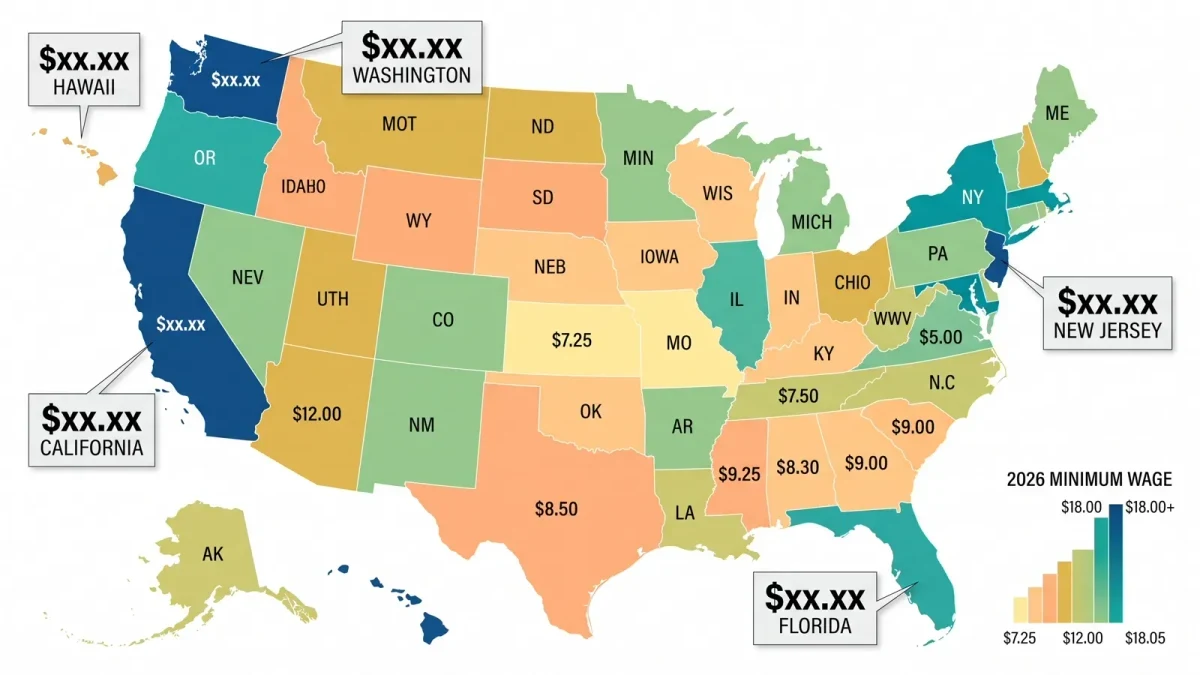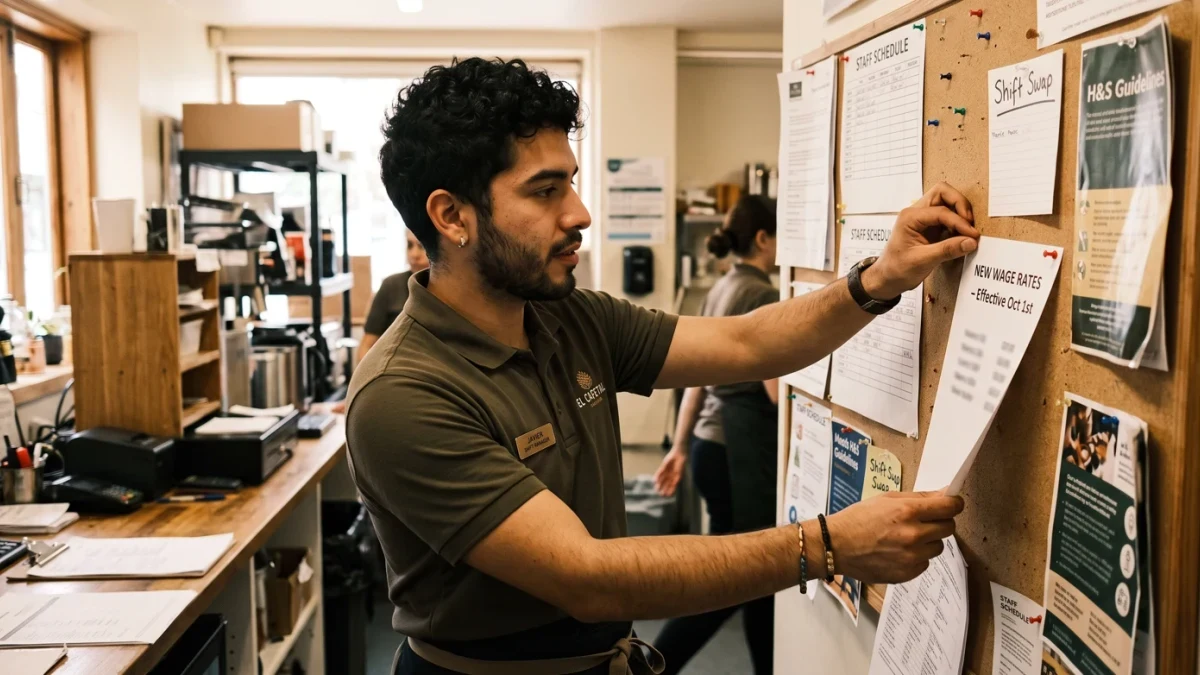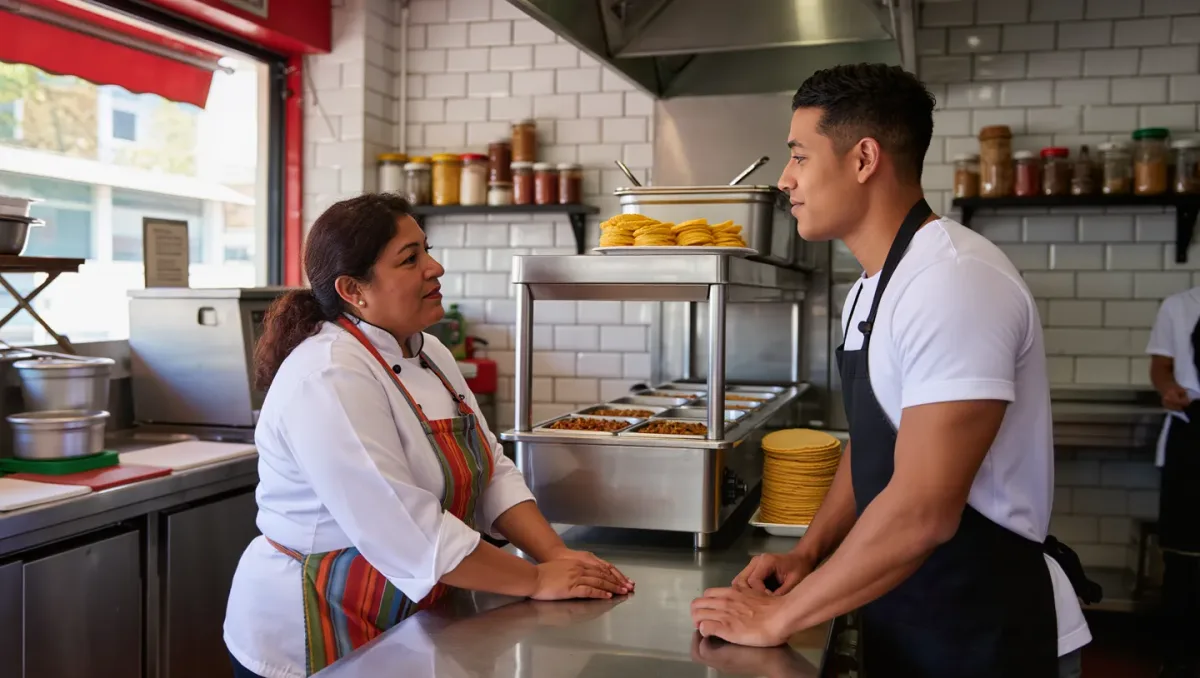
At a taqueria on Mission Street, the wall clock matters twice a day: once for the lunch rush, and once at the end of the month, when the owner runs payroll and the arithmetic of four line cooks, two cashiers and a dishwasher clears or doesn't. California's minimum wage rose to $16.90 an hour on January 1, 2026 — a 2.43 percent indexation per the Department of Industrial Relations, the second consecutive automatic increase under the 2016 law that ties the floor to inflation.
This site publishes information, not financial or legal advice. Wage classifications and local ordinances vary enough that employers and workers should verify rules that apply to their specific city and industry.
How the statewide floor is set
Since Proposition L in 2016, California's minimum wage follows a scheduled path and then indexes to the Consumer Price Index. The floor reached $15.50 in 2023, $16.00 in 2024, $16.50 in 2025 and $16.90 in 2026. Indexation means the number now changes every January by formula — the lesser of 3.5 percent or the prior year's CPI increase — rather than by political negotiation. For a full-time worker, the 2026 floor is worth about $35,150 a year before overtime.
Employers must post the current rate, pay it to workers regardless of immigration status, and apply it to daily overtime after eight hours. Small employers get no statewide break; the $15-an-hour small-business phase-in ended years ago.
The exceptions that reshape whole industries
Two sectoral overrides dwarf the statewide number. Under AB 1228, fast-food workers at chains with 60 or more locations nationwide earn $20.00 an hour as of April 2024, and the Fast Food Council created by that law can raise the sectoral floor annually by up to the lesser of 3.5 percent or inflation — it has already done so, moving the sector floor to $20.70 in 2025 for covered restaurants.
Healthcare runs on its own ladder under SB 525. Covered facilities phased in starting June 2024 at rates from $18 to $23 depending on size and type, with the largest systems reaching $25 an hour by late 2026. Both laws followed years of ballot-measure threats, and both illustrate the state's direction of travel: minimum wage policy is no longer one number, but a set of industry-specific floors that move on their own schedules.
Where cities run higher
Dozens of local ordinances sit above the state floor and most index annually. San Francisco's ordinance reached $19.18 an hour in July 2025, and San Jose, Oakland, Los Angeles, Berkeley, Emeryville and Santa Monica all exceed $17. Employers operating across city lines — the common case for a small retailer or restaurant group — effectively maintain a matrix of rates, paid-leave rules and posting requirements, since locals differ on how tips, health spending and small businesses are treated.
For a worker, the patchwork means the applicable wage can change by crossing a street. For an owner, it means compliance software and careful timekeeping, because wage-and-hour claims are the most common suits filed against California small employers.
What the research finds on both sides
The empirical record in California is more contested than the rhetoric. A consistent finding in the UC Berkeley IRLE school of research is that Bay Area and LA wage floors lifted earnings in food service with small employment effects, because turnover fell and prices absorbed part of the cost. Federal Reserve and University of Washington-affiliated studies in other regions find larger employment drags when the floor is set high relative to local wages — which is why economists watch the fast-food sector specifically: a $20 floor is a much larger share of prevailing wages in Bakersfield than in San Francisco.
Per EDD data, California's food services employment kept growing through 2024 even after the fast-food increase, though sector job counts in some inland counties flattened, and academic work on AB 1228 estimated sector employment effects in the low single digits of percent. Closure anecdotes and price increases are both real; neither settles the aggregate question.
The cost stack beyond the wage
An employer's bill rises faster than the wage itself, because statutory add-ons are computed off gross pay. Payroll taxes run on top of every wage increase: the employer's Social Security and Medicare share, state unemployment insurance taxes that rise automatically as the UI fund's federal loan ages, and Employment Training Tax. Workers' compensation premiums scale with payroll too, and several common labor-law penalties — meal-break and split-shift pay, for instance — are calculated using the regular rate of pay, so a higher wage inflates the price of any violation.
Counterweights exist. Some owners offset the escalator through productivity rather than price: better scheduling software, simplified menus, higher equipment budgets. Others pass costs through, and menu-price studies after AB 1228 found fast-food prices in California rose several percent relative to trend, split between customers and margins. The distribution of that burden — households, owners, landlords — is where the political argument about the wage floor is actually decided.
What this changes for a California reader
For workers, the practical effect is straightforward: the floor moves every January without anyone voting on it, so a raise is scheduled but modest, and sectoral laws matter more than the statewide number in restaurants and hospitals.
For owners, the planning horizon is now annual and predictable, which changes the adjustment tools: menu repricing, scheduling, self-service kiosks and automation decisions are made against a known escalator. Watch the Fast Food Council's 2026 wage order and the first wave of SB 525 step-ups in June and October 2026 — those dates, not the statewide indexation, will set the year's labor-cost story.