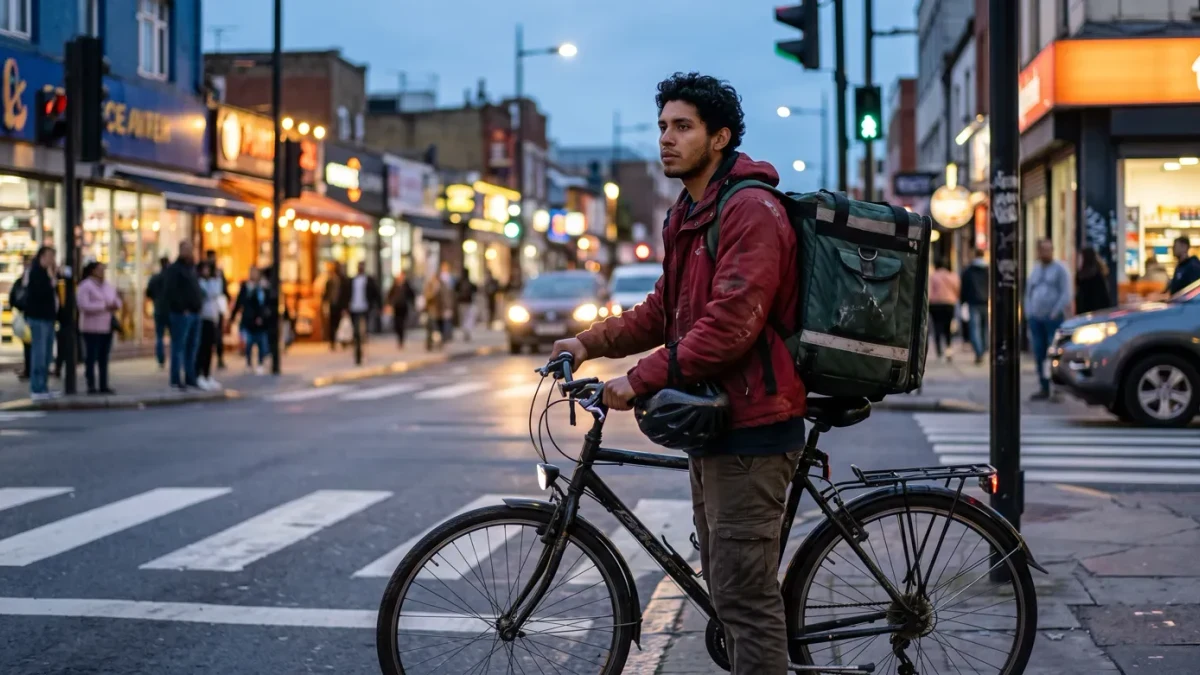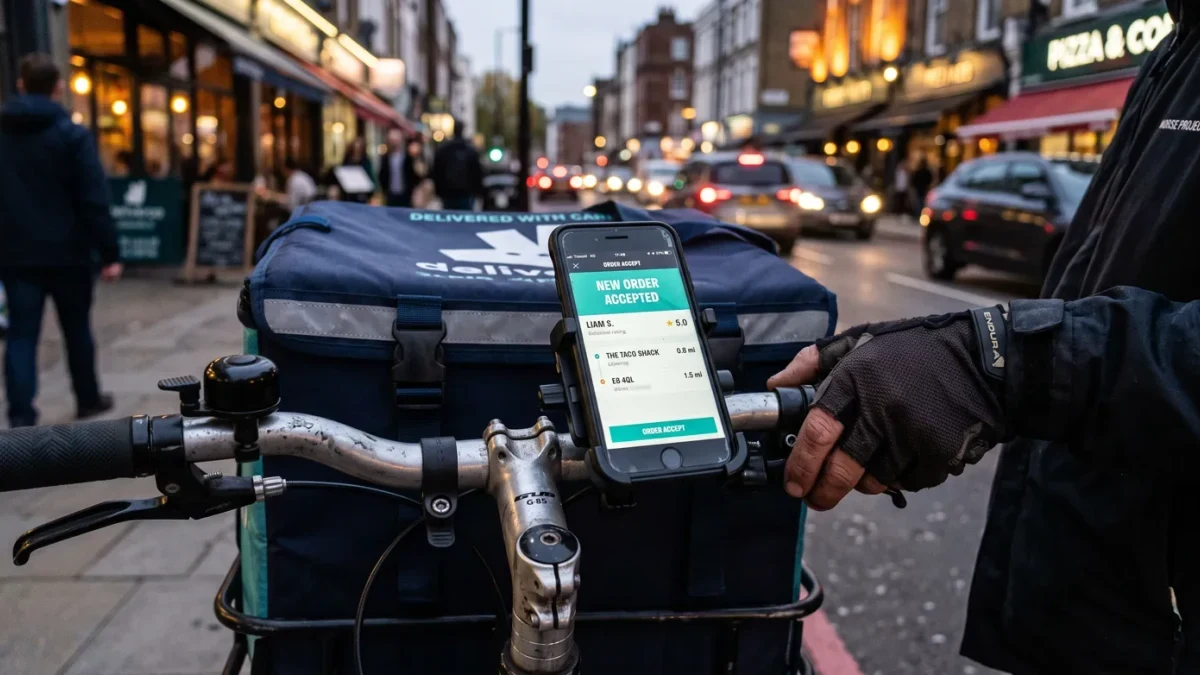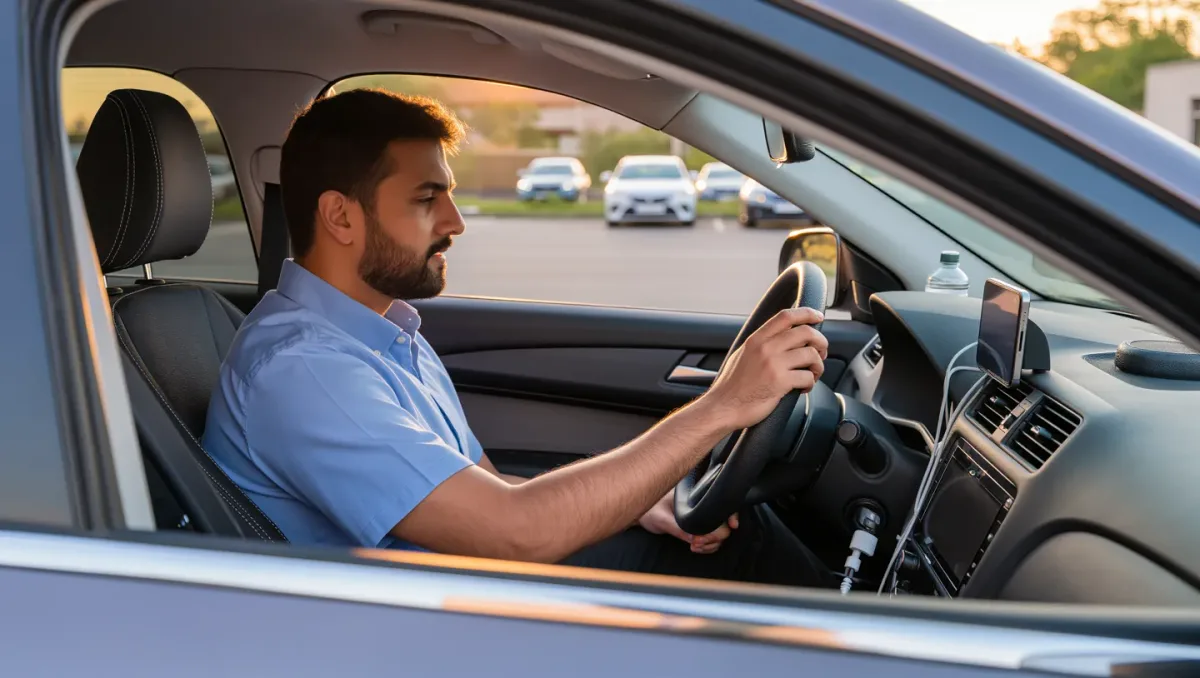
The driver waiting at a San Diego curb between rides can explain California's labor law better than most of its lawyers. Proposition 22, passed in November 2020 with 58.6 percent of the vote, exempts Uber, Lyft, DoorDash, Instacart and similar apps from classifying drivers as employees, and in exchange guarantees an earnings floor tied to the state minimum wage, a per-mile expense allowance, and limited healthcare stipends. In July 2024 the California Supreme Court upheld the measure's constitutionality, ending a four-year legal fight over whether voters could carve a sector out of AB 5.
This site publishes information, not financial or legal advice. Individual driver pay varies with app, city, hours and vehicle, and the calculations here describe the statutory framework rather than any driver's actual results.
How the earnings guarantee is computed
The core promise works like this: for every minute a driver is “engaged” — carrying a passenger or a delivery from pickup to drop-off — the platform must pay at least 120 percent of the state minimum wage. With California's floor at $16.90 an hour in 2026, the engaged-time guarantee computes to about $20.28 an hour. The extra 20 percent is the law's substitute for employer payroll taxes and workers' compensation contributions. business coverage.
Engaged time is the load-bearing word. Time spent waiting for requests, driving toward a pickup, or positioned near an airport queue does not count toward the guarantee, and the platforms' internal algorithms control request density. Academic studies, including UC Berkeley labor center analyses, have estimated that effective total wages — counting the unpaid waiting share — often land 20 to 40 percent below the headline engaged rate, which is why the difference between “engaged time” and a shift is the central dispute in every follow-on policy fight.
On top of the wage floor, platforms must pay at least 30 cents per engaged mile, indexed upward each July with inflation, meant to cover gasoline, depreciation and insurance. That allowance is why many drivers describe the job as “paying myself a mileage rate to rent my own car.”
Benefits, stipends and the gap to employee status
Prop 22's benefit layer is prorated to active time. Drivers averaging more than 15 hours of engaged time per week across platforms earn healthcare stipends scaled to a Covered California silver plan — higher for those above 25 hours — and all covered drivers receive occupational accident insurance for on-app injuries plus contingent liability coverage. What they do not receive is the package that comes with employee status under California law: unemployment insurance eligibility, paid sick leave, overtime, collective bargaining rights, or the state minimum wage for every hour worked.
The ballot measure cost remains the most expensive initiative campaign in American history — the platforms' “No on 10” campaign spent over $200 million defending Prop 22 against its 2024 repeal attempt, on top of roughly $224 million to pass it, per Secretary of State filings. The repeal measure, Proposition 32 on the November 2024 ballot, failed with about 37 percent support, leaving the framework intact but politically permanent rather than settled.
Who actually does this work
Driver demographics shape how the guarantee reads. Industry and university surveys consistently find that a majority of California app-based drivers work part time — most report under 20 engaged hours weekly — and many treat the apps as income smoothing on top of another job: driving after a warehouse shift, between classes, or while between positions. A meaningful share are recent immigrants who value the absence of an interview and the immediate cash flow, which is why supply of drivers has held up even as effective per-hour pay drew criticism.
The flip side is vehicle economics. Because drivers supply the car, the statutory mileage allowance functions as their entire maintenance budget, and high-mileage operation moves repair costs forward — tires, brakes, timing belts — on personal vehicles. Driver forums fill with the arithmetic of when gross earnings stop covering depreciation, an accounting question Prop 22 explicitly left to each driver.
What changed after the court victory
Two post-victory developments matter for paychecks. First, the July indexation mechanism has functioned: the earnings floor rises automatically with the state minimum wage each January, and the mileage allowance with CPI each July, so the guarantee has kept pace with — but not exceeded — California's general wage floor. Second, union pressure produced a negotiated successor framework: service employees' unions and the platforms agreed in 2024-2025 on a proposed successor measure and legislative package that would lift the engaged-time guarantee substantially, expand paid sick time and create a bargaining pathway, with talks continuing as platforms price the changes into fares and delivery fees.
Insurance costs have become the swing variable. Rising bodily-injury claims pushed rideshare insurance premiums sharply upward in 2023-2025, and both Uber and Lyft attributed portion-of-fare increases to insurance line items, which shows up to riders as higher prices and to drivers as somewhat lower request volume per hour.
What this changes for a California reader
For a driver, the practical arithmetic is: engaged rate near $20 an hour, mileage allowance near 35 cents a mile, benefits only above 15 engaged hours weekly, and total effective pay that depends heavily on how the app distributes waiting time. For a rider or diner, the framework is why delivery fees climbed — the cost floor is now statutory rather than market-clearing.
Watch the next indexation each July, the implementation of the union-platform successor framework in Sacramento, and the effective-wage studies that keep revising the engaged-versus-total-time ratio. That ratio, more than any headline number, determines whether Prop 22 reads as a floor or a loophole.