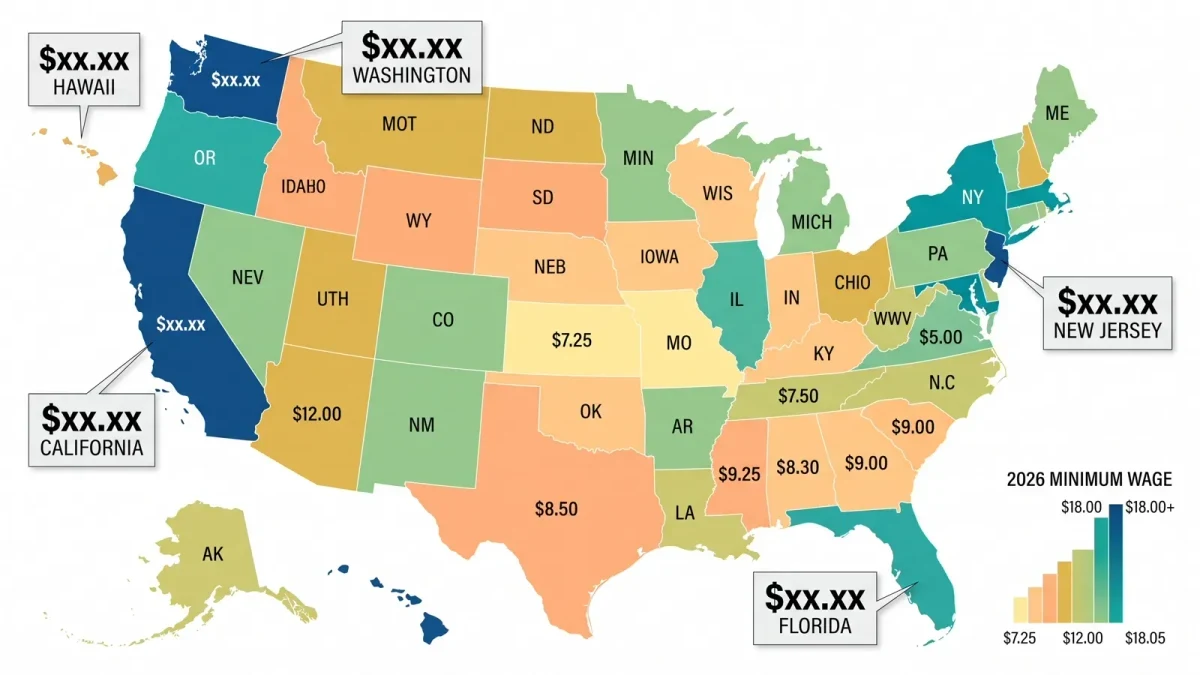
California's statewide minimum wage rose to $16.90 per hour on January 1, 2026, up from $16.50, per the Department of Industrial Relations, and the increase happened automatically: a 2016 statute ties the floor to inflation, so each summer's Consumer Price Index reading sets the next January's number without another vote. Fast food workers at large chains hold a separate higher floor of $20 per hour, set by the Fast Food Council that took effect in April 2024, and most covered healthcare workers continue a schedule, established by SB 525 in 2023, that steps toward $24 an hour during 2026.
This explainer covers the layers of California's wage floors, who is covered by each, and what the indexing formula means for every January that follows.
How does the automatic increase work?
Since the passage of SB 3 in 2016, the statewide minimum adjusts each year by the lesser of the regional Consumer Price Index change or 3.5 percent, announced by the Department of Industrial Relations and effective each January 1. The $0.40 rise to $16.90 reflected that formula applied to the prior year's inflation, per the department's published notices. One consequence is easy to miss: because the floor rises automatically, the exempt-employee salary threshold, the minimum salary a worker must earn to qualify as exempt from overtime, also rises each January, since state law ties it to double the minimum wage for a full-time schedule. Employers who miss the January adjustment face the same back-pay exposure as any underpayment. politics coverage.
What are the special industry floors?
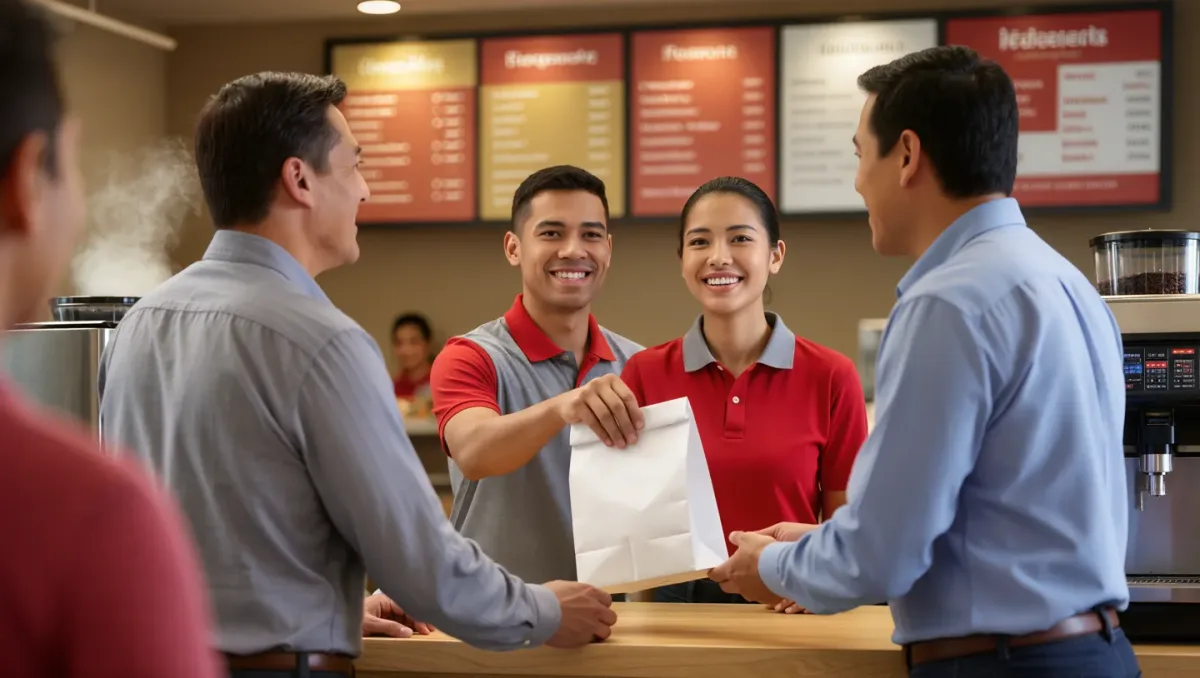
Two sectors have their own tracks. Fast food employees at chains with more than 60 locations nationwide earn at least $20 per hour under the council system created by AB 1228, effective April 1, 2024; the council can raise the rate annually by up to the lesser of 3.5 percent or inflation, and no increase beyond $20 had taken effect for 2026 per the department's FAQ. Covered healthcare workers follow SB 525's phase-in, which raised most covered facilities to $23 an hour in 2025 and steps to $24 during 2026, with delayed compliance dates for some facility types negotiated after passage. Finally, local ordinances stack on top: cities including San Francisco, San Jose, and Los Angeles set their own higher floors, some updating each July rather than January, so a worker's actual minimum depends on the address of the workplace.
| Track | Rate | Effective |
|---|---|---|
| Statewide general | $16.90 | January 1, 2026 |
| Fast food, large chains | $20.00 | April 1, 2024 |
| Healthcare workers (SB 525 schedule) | stepping to $24 | 2025-2026 phases |
| Local ordinances (example cities) | often higher | varies, often July updates |
Who enforces this, and how?
Enforcement runs through the Labor Commissioner's Office, which investigates wage claims, and the private right of action that workers carry under state law. Penalties scale: willful underpayment can trigger liquidated damages equal to the unpaid wages plus interest, and the Private Attorneys General Act, even after its 2024 reform under AB 2288, lets workers sue for penalties on behalf of similarly situated employees, with the reform lowering penalty tiers and directing more recoveries to workers themselves, per the Governor's office summary at signing. Wage theft enforcement was also restructured in 2024, with the Department of Industrial Relations taking over citation authority from the old PAGA mechanism for many violations.
Why the indexing formula matters more than the number
Automatic indexing quietly changed California's wage politics. Before 2017 the floor moved only when the Legislature and Governor agreed, which produced episodic jumps and long freezes; since then it moves every January like a tide, and the political question shifted from whether to raise the wage to whether to override the formula. The 2016 law caps annual growth at 3.5 percent, so a low-inflation year produces a small increase, but there is no mechanism for a freeze short of new legislation, and none has passed. Budget analysts and wage boards now treat the January announcement as infrastructure, the way transit agencies treat a fare index.
For small employers the practical effects concentrate at the boundaries of the law: teenage and entry-level hires, tipped-adjacent scheduling, and the exempt-salary ripple that reclassifies some managers each January. Payroll providers push compliance updates every fall after the DIR notice, and the Wage Order enforcement staff see a predictable cluster of underpayment claims each spring from employers who set salaries to the prior year's numbers.
What does the research say about effects?
California has run the country's most-watched minimum wage experiments for a decade, and the findings are mixed in the way labor economics usually is. Studies of the fast food increase documented wage gains for roughly half a million workers, per university analyses published after April 2024, alongside employment effects that remain contested: some analyses found modest employment losses concentrated among lower-revenue locations, others found little measurable change, and menu prices rose in the sector. What is not contested is the fiscal geometry: a higher floor reduces the number of Californians earning under the poverty line while raising payroll costs that flow into prices and, at the margin, hours and staffing choices.
What to watch
Watch the department's August inflation announcement, which sets the January 2027 rate, and the Fast Food Council's next wage review, the moment the $20 floor stops standing still. Because every layer of California's system now moves automatically or on a council's schedule, the relevant question is never whether the wage floor will change, but by how much and for whom.