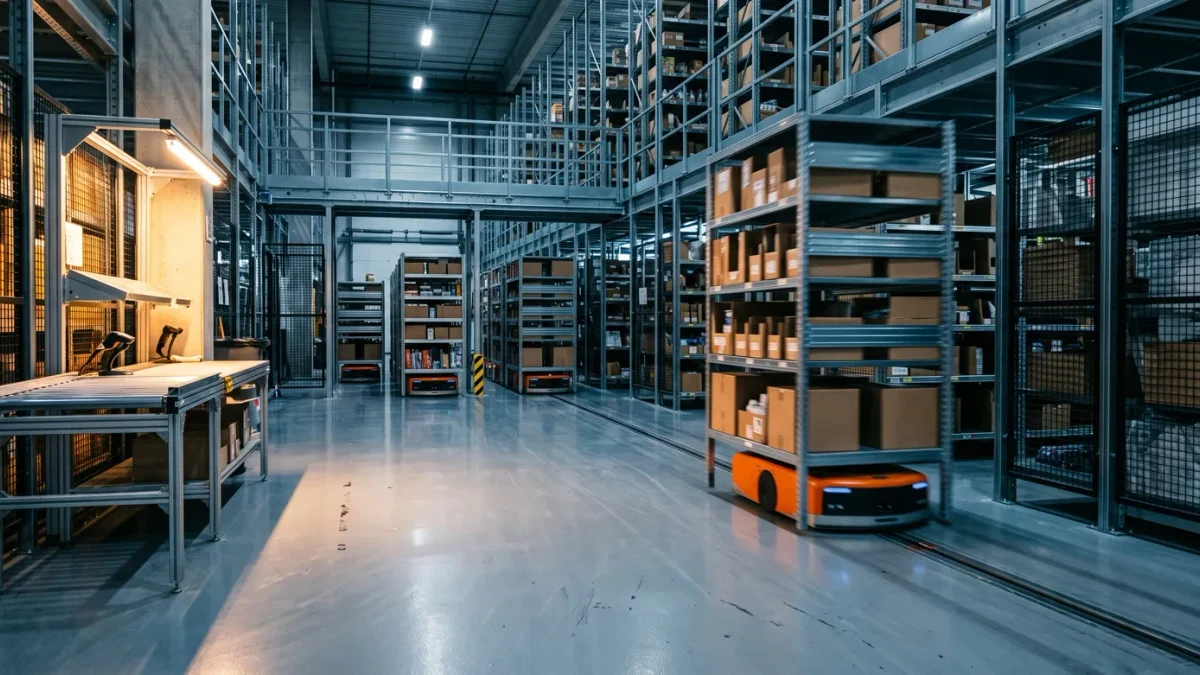
From the air over Fontana, the Inland Empire's economy is legible as geometry: white roofs in parallel rows, truck courts striped with trailers, rail spurs threading between buildings the size of city blocks. Riverside and San Bernardino counties now hold more than a billion square feet of industrial building space — the largest logistics market in the United States — and the two counties together employ well over 200,000 people in transportation and warehousing, per EDD payroll data.
Why the boxes landed here
Geography did the initial work. A truck from San Bernardino can reach the ports of Los Angeles and Long Beach in about 90 minutes without crossing a mountain range, and it can reach the Los Angeles basin's 13 million consumers the same morning. When container volumes exploded after China's WTO entry in 2001, the region's cheap flat land and freeway grid made it the default place to turn ocean containers into store-ready pallets.
E-commerce multiplied the model. Every online order that used to move as a pallet to a store now moves as individual parcels through a sortation center, which needs three to four times the square footage per dollar of sales that store distribution required. Amazon alone operates more than 100 facilities in the two counties, per company and county records, and the region's industrial rent roughly tripled between 2010 and 2022 as retailers and parcel carriers competed for space near the ports.
The work inside changed too. Modern fulfillment centers run pick-and-pack operations with hundreds of workers per shift on timed tasks, a labor model unlike the forklift-and-pallet buildings of the 1990s. Median warehouse wages in the region run in the low-to-mid $20s an hour, per state occupational wage data, above retail pay but below the county median wage for all industries — a gap that shapes the region's household economics.
The rules catching up to the model
Two regulatory fights define the industry's current decade. The first is labor. Assembly Bill 701, signed in 2021, requires warehouse employers to disclose productivity quotas and bars quotas that prevent legally required breaks — the first law in the country aimed at algorithmic warehouse management, passed after reports of injury rates at fulfillment centers well above industry averages. Enforcement and litigation over the law's meaning continue, and it has become the template other states cite.
The second is air. The South Coast air district, which covers the region, adopted its Warehouse Indirect Source Rule in 2021, charging warehouse operators a fee per thousand square feet unless they earn credits by buying zero-emission trucks, installing charging or hosting neighborhood-scale clean-air projects. The rule exists because the region's air remains among the worst in the nation for ozone and particulates, per federal air-quality data, and trucks serving the warehouse fleet are a leading contributor. Operators have spent hundreds of millions under the rule while contesting its scope in court.
What the buildings displaced
The region's transformation has a before-picture. Riverside and San Bernardino counties were among the most productive dairy and agricultural counties in the nation into the 1990s, and the wave of warehouse construction converted tens of thousands of acres of some of the country's best farmland, a shift local academic researchers have documented acre by acre using county assessor records. Dairy operations moved north to the Central Valley or out of state, and the milk trucks and citrus packing houses that anchored towns like Ontario and Chino gave way to building pads negotiated at industrial land prices.
The conversion also redrew municipal finance. Cities that annexed and rezoned land for logistics collected development fees and sales tax from distribution activity, which is why nearly every IE city approved more warehouses even as residents organized against truck traffic. Community groups now tie the debate to health: proximity studies link asthma rates in Riverside and San Bernardino school communities to freight corridors, and a 2023-2024 wave of litigation and moratoria over warehouse projects has slowed approvals in several jurisdictions for the first time in the market's history.
The post-boom recalibration
The market cooled from its pandemic peak. E-commerce's share of retail sales settled around 16 percent nationally, below its lockdown spike, and the region's industrial vacancy rate climbed from under 1 percent in 2022 to several times that by 2024-2025, per brokerage market reports, with net absorption turning negative in some quarters as retailers right-sized overbuilt networks. Rents plateaued and concessions returned for the first time in a decade.
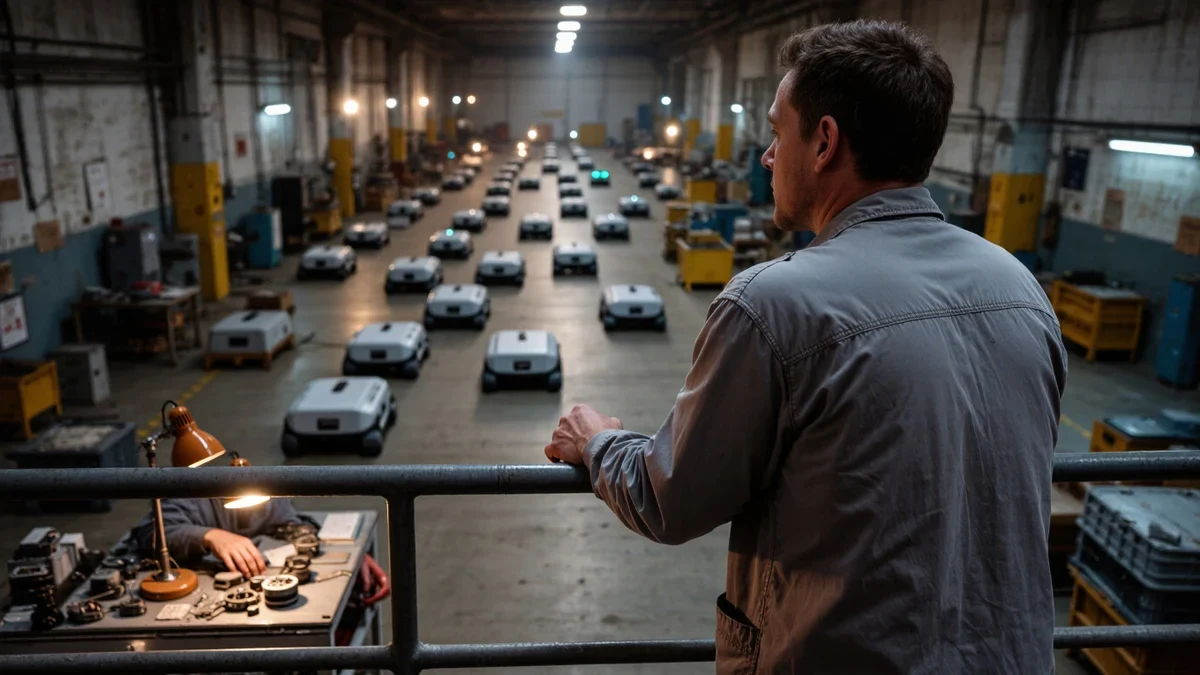
Structural pressures point in the opposite direction from contraction. Rail-linked transload facilities keep filling as container volumes grow, and automation is densifying the box: goods-to-robot systems let the same building handle more throughput with fewer pickers, which softens employment growth per square foot even as the real estate remains in demand.
What this changes for a California reader
The Inland Empire's choice is whether it captures more value per square foot or simply more square feet. Local governments that approved most of the existing stock collected sales-tax-generating distribution for two decades, and now face the fiscal arithmetic of landlocked jurisdictions with little farmland or free land left to convert.
Watch three markers through 2026: the air district's rule enforcement, which will show how fast the drayage fleet electrifies; warehouse employment against the EDD's transportation line, the first place an automation wave would appear; and the two counties' vacancy rates, which will say whether the region's next billion square feet gets built here or in Phoenix and Las Vegas.