California has recalled a governor exactly once. In October 2003, 55.4 percent of voters removed Gray Davis and replaced him with Arnold Schwarzenegger, per the Secretary of State's certified results, and the state's second attempt, against Gavin Newsom in September 2021, failed with 61.9 percent voting no. The mechanism that produced both elections is the 1911 recall, and its rules are specific: a gubernatorial recall petition needs signatures equal to 12 percent of the votes cast in the last election for the office, gathered within 160 days, per the Elections Code.
This explainer covers how the process works, what appears on the recall ballot, and why the state's most dramatic election device is also its rarest outcome.
What are the signature requirements?
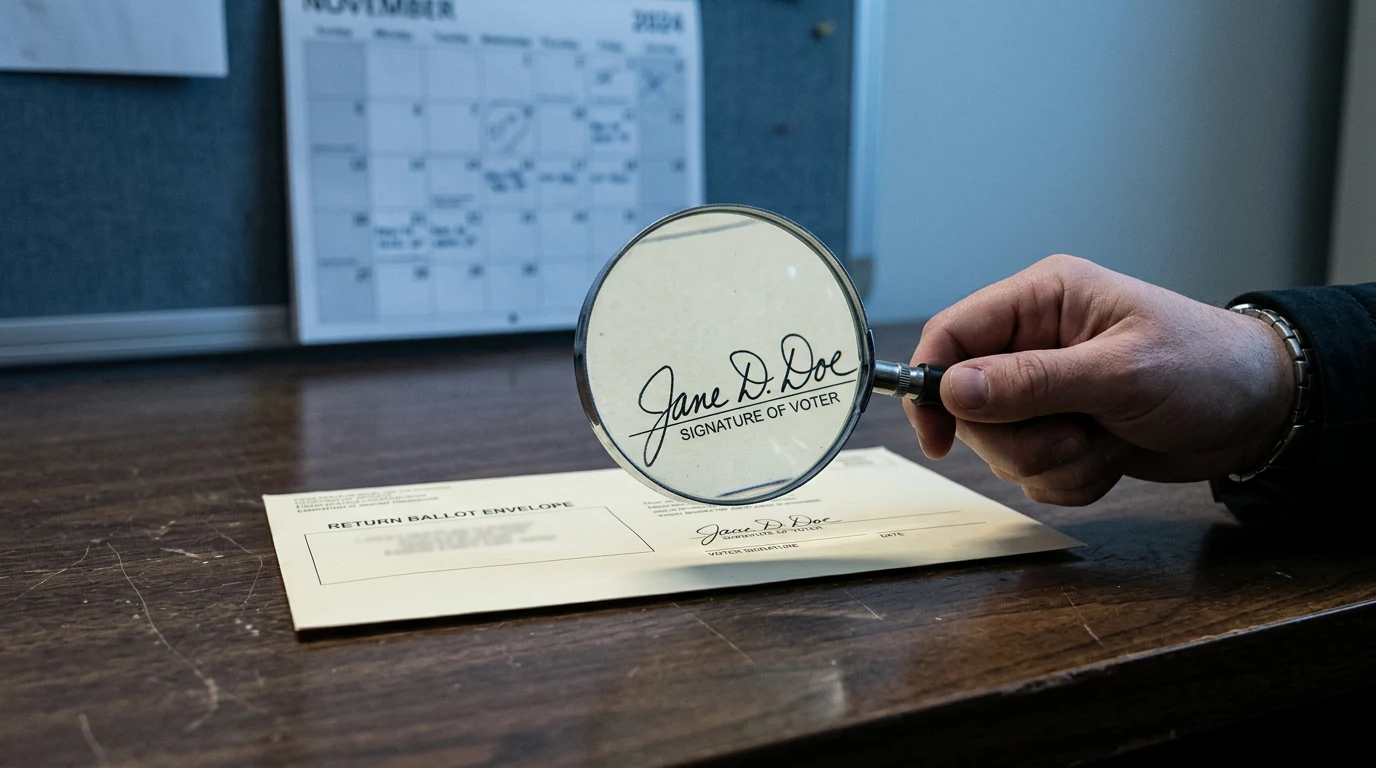
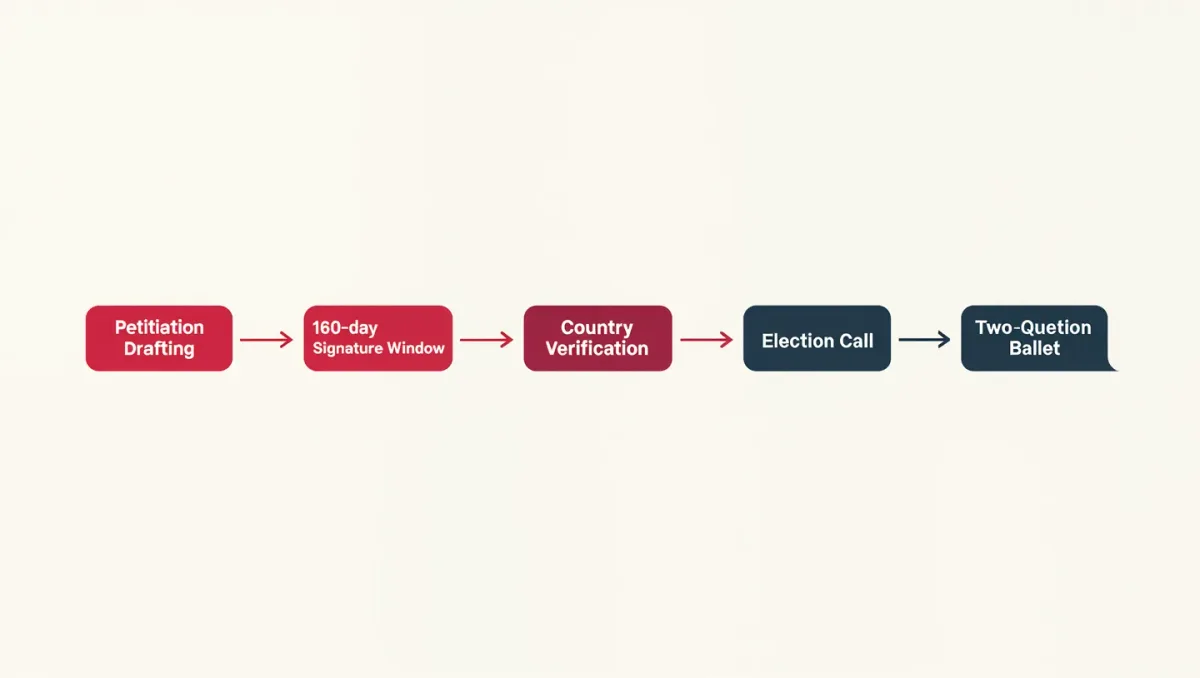
The thresholds scale with the office. Recall of a statewide officer, including the Governor, requires signatures from 12 percent of the turnout at the last election for that office, with signers spread across at least five counties equal to 1 percent of the last gubernatorial vote in each. Legislative and judicial recalls carry a higher bar, 20 percent of the last vote in the district. Petitioners have 160 days to circulate for statewide officers, and county officials verify signatures the same way they do for initiatives, by random sample and full count near the line. If the count clears, the Lieutenant Governor, acting as the Elections Code directs, calls a special statewide election, historically set between 60 and 80 days from certification for a gubernatorial recall.
| Office | Signature threshold | Circulation window |
|---|---|---|
| Statewide officers, incl. Governor | 12% of last election's vote | 160 days |
| Legislators, judges | 20% of last district vote | 160 days |
| County and local offices | set by local charter or code | varies |
What does the ballot look like?
A California recall ballot asks two questions in sequence: first, whether to remove the official, answered yes or no; second, who should replace them if the recall passes. The replacement list can include anyone who files and pays the filing fee or gathers substitute signatures, and the winner is simply the highest vote-getter on the second question, with no majority requirement and no party runoff. That structure is the source of the 2003 result: 135 candidates appeared on the replacement list, and Schwarzenegger won the office with about 48 percent of the votes cast on the question, a plurality, not a majority.
The two-question design also produces the split outcome the 2021 campaign ran against: a voter can vote no on removal and still answer the replacement question, but those votes count only if the recall passes, a quirk legal scholars have debated without legislative change.
How often do recalls actually happen?
Statewide recalls are rare because the signature bar is enormous. Twelve percent of a modern gubernatorial election's turnout runs to roughly 1.5 million verified signatures, and only the 2003 and 2021 campaigns have cleared it against a governor. The recall does real political work lower on the ladder, though: state legislators have faced recall elections, most consequentially in the 1995 assembly recalls that shifted the chamber's balance, and school board, city council, and county recalls appear on local ballots nearly every year, from recall elections against district attorneys to ones that have reshuffled city councils. The mechanism is therefore common in the state's political life even where its headline outcomes are not.
The money and the calendar around a recall
A qualifying recall collapses the normal election calendar. Once certified, the special election runs on its own compressed schedule, with campaigns operating in weeks rather than the yearlong arc of a regular contest, and spending concentrates accordingly: the 2003 replacement race drew national celebrity candidacies and record spending for its time, and the 2021 election cost counties tens of millions to administer, per county election officials' public estimates at the time. Recall proponents must gather their signatures before any of that spending begins, which is why professional petition firms dominate the statewide attempts and why grassroots local recalls, run on volunteers and community grievance, look nothing like them operationally.
Timing rules also shape strategy. Signatures are dated, and any gathered before the official's first year in office does not count, a rule designed to give winners a grace period; and an official facing a recall in the final months of a term generally sees the matter resolved by the regular election instead, which the law prefers over a redundant special contest.
Why 1911, and does it work as designed?
The recall joined the initiative and referendum in the 1911 reforms as a tool against captured institutions, and its designers framed it as a safety valve rather than a governing tool. A century of use suggests that framing held: the threat disciplines officials between elections, especially in low-turnout local offices where signature thresholds are reachable, while the statewide bar keeps gubernatorial recalls exceptional. Reform proposals recur, from requiring majority-vote replacements to consolidating recall elections with regular ballots, and none has changed the core two-question structure.
For voters, the practical advice the elections officials repeat each time is simple: answer both questions. The removal question and the replacement question are independent votes, and skipping the second does not block the recall; it merely shrinks the electorate that picks the successor, the dynamic that let a plurality winner take the state's highest office in 2003. County registrars print both questions on every recall ballot, and the Secretary of State's voter guides have carried the same warning since, an institutional memory of the one election that ended with a candidate winning fewer votes than the official being removed had received on question one.
What to watch
Watch the Secretary of State's recall tracking page, which logs every circulating petition against state officials, and any local recall drive in your own county, where the mechanism does its most frequent work. California's recall has fired once at the governor's office in a century, but its lower-caliber versions are always loaded somewhere on the ballot.