Walk into a downtown Los Angeles law firm and business casual means a tailored blazer and leather shoes. Drive forty minutes to an Inland Empire logistics office and it means dark jeans and clean sneakers. The phrase describes a range, not a rule, and the range is wider for women than for men because women have more garment categories to choose from — and more ways to guess wrong.
The honest answer to "what does business casual mean for women" is this: it means clothes that look deliberate. Not formal, not weekend. Somewhere in the middle sits a surprisingly stable set of pieces — trousers, blouses, knit tops, closed-toe shoes — that work in almost any office in California, from a Sacramento agency to a San Diego startup.
This guide breaks the term down by industry, by garment, and by the situations where the safe choice changes. No brand names, no shopping list, just the logic behind the code so you can read your own office.
What does business casual actually mean for women?
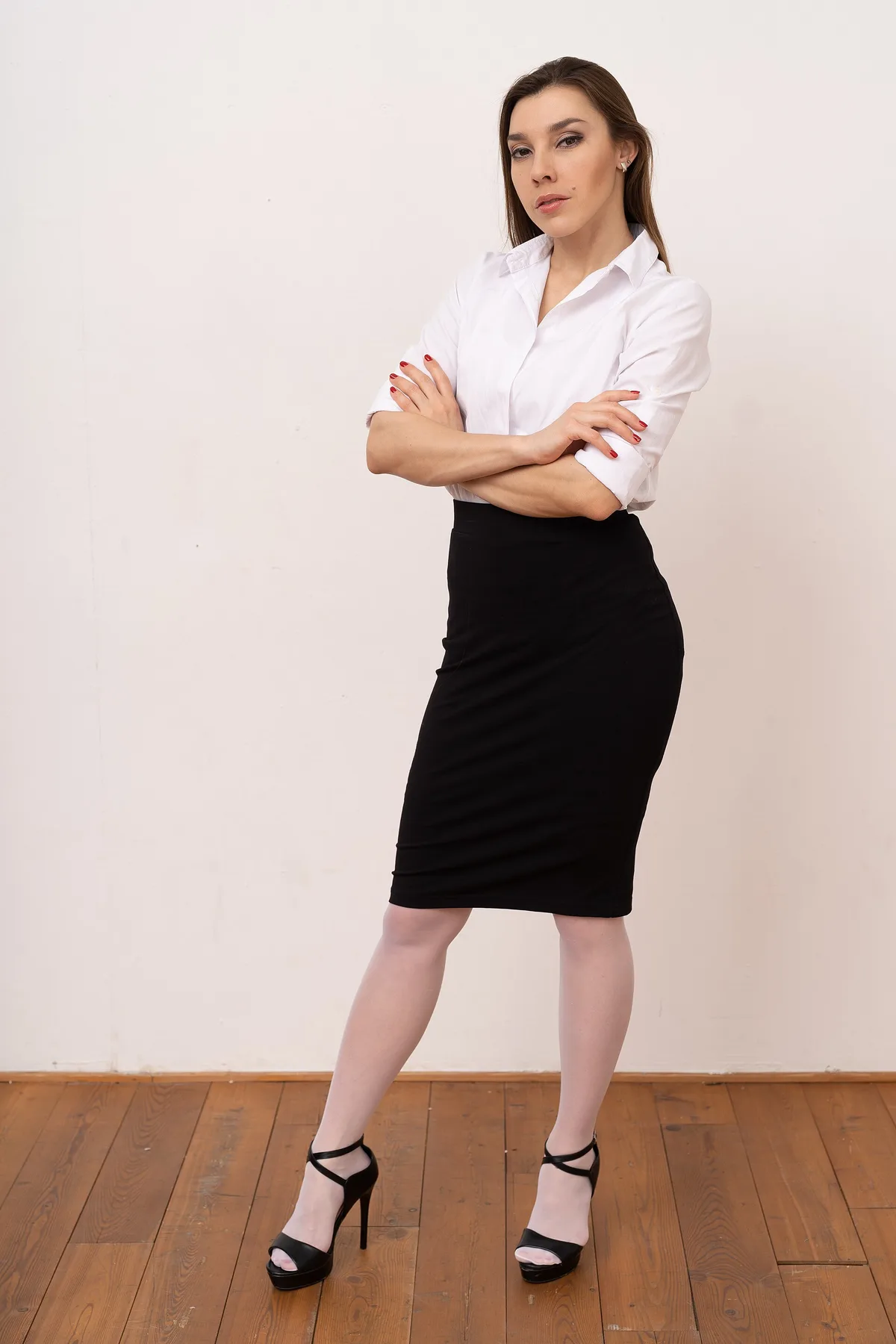
Business casual is one notch below formal office wear. For women, the working definition looks like this: tailored trousers or a knee-length skirt, a blouse or fine-knit top, and closed shoes with a low or flat heel. A blazer is optional but useful, because it signals effort without going full suit. Dresses count when they are structured and not casual sundresses. Readers following this should also see One Billion Square Feet: How Warehouses Took Over the Inland Empire.
What it rules out is just as useful. Denim, unless the office has explicitly relaxed it. Leggings worn as pants. Anything sheer, sequined, or cut for the beach. Flip-flops and athletic sneakers. The point of the code is not modesty policing — it is a shared signal that everyone showed up for work, not for the weekend.
The trickiest part for women is that the same garment reads differently depending on context. A sleeveless shell top is unremarkable in a tech office. In a conservative finance firm, it invites comment it should not. Reading the room matters more than memorizing a list.
How does business casual change by industry?
Every industry bends the term toward its own norms, and the bends are predictable.
- Law, finance, government: The most conservative end. Blazers are near-mandatory for client-facing roles. Neutral colors, closed-toe shoes, minimal jewelry. A pantsuit or skirt suit is the fallback when in doubt.
- Tech and startups: The loosest. A good t-shirt under a cardigan can qualify, and jeans are standard. The one thing that still gets noticed is looking sloppy rather than casual — wrinkled, stained, or too tight.
- Healthcare administration and education: Practical middle ground. Washable fabrics, flat shoes, layers for cold buildings. Comfort wins ties with polish here.
- Retail and hospitality offices: Often mirrors what staff wear on the floor, one notch up. If the floor wears polos, the office wears blouses.
- Creative fields — media, design, entertainment: Personal style is the norm, but the industry's version of casual is expensive-casual. The rule is that the outfit looks chosen, not thrown on.
A useful shortcut: match the dress of the people two levels above you, not your peers. That is the level the code is actually calibrated to.
Which pieces work in almost any office?
A small set of garments covers nearly every business casual situation a California office will throw at you.
- Tailored trousers in a neutral color — black, navy, gray, or a warm tan. They pass everywhere from a courtroom to a co-working space.
- A structured blazer. Throw it over anything borderline and the outfit upgrades instantly. It also solves air-conditioned buildings.
- Blouses and fine-knit tops in solid colors or quiet patterns. Wrinkle-resistant fabrics earn their keep in a state where commutes are long.
- A knee-length skirt or a simple dress with sleeves or a layer over them. One garment, two settings.
- Closed-toe flats, loafers, or low block heels. Comfortable enough for a warehouse tour, presentable enough for a client meeting.
California's climate adds one local wrinkle: layering. Offices run cold in August, and a cardigan or blazer you can remove keeps a single outfit working from a hot parking lot to a frigid conference room.
What this means for your first week on a new job
New hires face the hardest version of the problem, because they have not yet seen what the office actually rewards. The practical sequence is simple.
- Overdress slightly on day one. A blazer you can remove costs nothing; underdressing is noticed longer.
- Watch the managers, not the interns, for the real ceiling of the code.
- Ask directly if unsure. A quick question to HR or a friendly colleague — "is denim okay here?" — is normal and beats weeks of guessing.
- Build a rotation of three or four safe outfits before experimenting. Expand once you know the range.
One more street-level observation from watching offices for years: nobody remembers the person who dressed slightly too formally. People do remember the one who dressed too casually. The asymmetry makes the first-week strategy easy.
Does the same code apply to job interviews?
No — interviews run one notch more formal than the office's daily code, whatever that code is. If the office is blazer-casual, wear the blazer. If the office is jeans-and-tee, wear trousers and a blouse. Interviewing slightly above the room reads as respect; matching it exactly reads as belonging.
Remote interviews change the calculus again. On video, the camera frames roughly the top third, so the top matters most — a solid-color blouse or knit, modest jewelry, nothing with fine stripes that strobe on camera. Shoes are optional in a way no in-person interview allows.
The bottom line on dressing for any office
Business casual for women is not a fixed uniform. It is a range with a conservative edge — suits and closed shoes — and a relaxed edge — dark denim and knit tops — and every office sits somewhere on it. The garments that travel best across that range are tailored trousers, blazers, solid blouses, and closed flats. The judgment that travels best is this: look like you made a decision, not like you grabbed whatever was clean.
California's economy spans more industries than most states, from the film lots covered in our report on Hollywood's Production Slide and the $750 Million Bid to Reverse It to the ports and warehouses that keep goods moving. That spread is exactly why the dress code varies so much here — an office dress code in this state is really an industry dress code. For more coverage of work and the economy, see our business section. We covered a connected angle in Hollywood's Production Slide and the $750 Million Bid to Reverse It.
Sources: grad.temple.edu