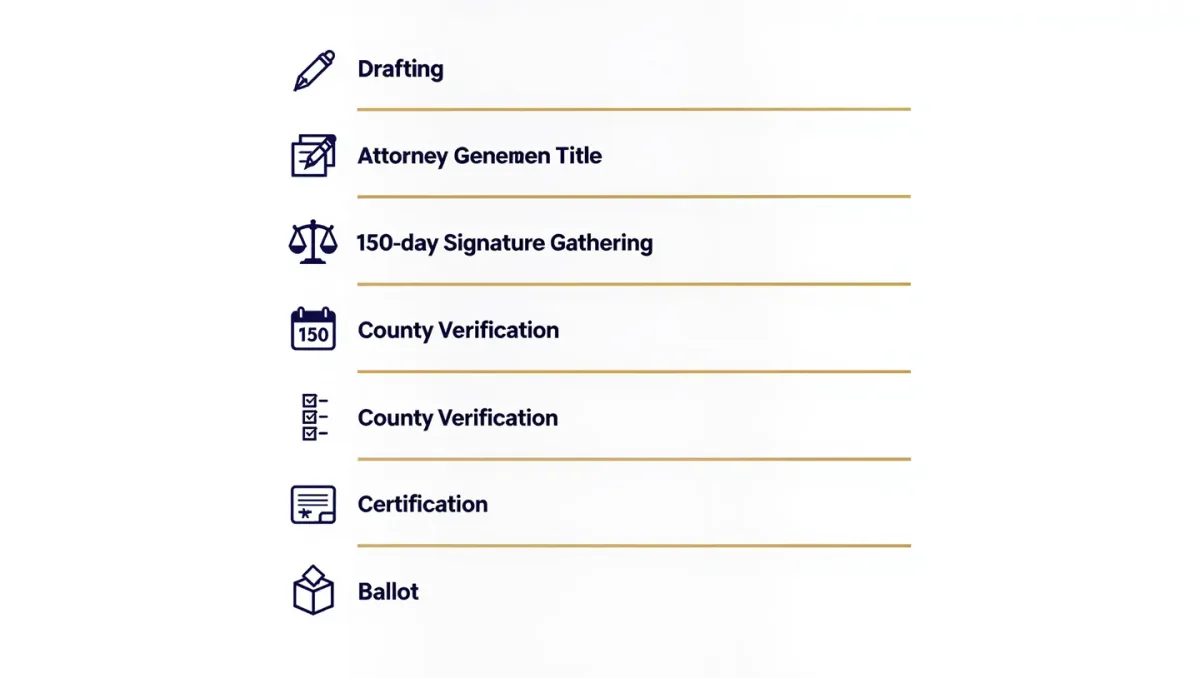
California adopted the initiative process in 1911, and it works like this in brief: proponents write a law, the Attorney General titles it, supporters collect signatures equal to a fixed percentage of votes cast in the last election for Governor, and if the count verifies, the measure reaches the next statewide ballot, bypassing the Legislature entirely. A statutory initiative needs signatures from 5 percent of that gubernatorial vote; a constitutional amendment needs 8 percent, per the Secretary of State's filing requirements.
This explainer follows the process step by step, because nearly everything contentious on a California ballot, from taxes to criminal penalties to housing rules, arrives by this door.
Where did the power come from?
The initiative, referendum, and recall arrived together in 1911 during the Progressive era, when Governor Hiram Johnson and reformers pushed constitutional amendments designed to break the grip of Southern Pacific railroad interests over the Legislature. The premise was direct: if the elected lawmaking process is captured, the people need their own legislative channel. More than a century later the channel is heavily used; per Secretary of State records, hundreds of initiatives have qualified for California ballots, and dozens more circulate for signatures in any given year.
What are the actual steps?
The sequence is fixed in the state constitution and Elections Code. Proponents submit a proposed measure to the Attorney General, who prepares a title and summary, a process that also carries a fee, and the Department of Finance estimates fiscal impact for measures that would spend money. Proponents then have 150 days to gather signatures. If the count reaches the threshold, county elections officials verify signatures, first by random sampling and then, if sampling lands near the line, by a full check. Once the Secretary of State certifies the petition, the measure goes to the voters at the next statewide election, or the Legislature can place it earlier, adopt it outright, or put a competing measure on the same ballot.
| Requirement | Statutory initiative | Constitutional amendment |
|---|---|---|
| Signature threshold | 5% of last gubernatorial vote | 8% of last gubernatorial vote |
| Circulation window | 150 days | 150 days |
| Effect if passed | Added to statute; Legislature may amend by same standard | Embedded in the constitution; only voters can change it |
What the paperwork actually requires
The details trip up first-time proponents. The draft submitted to the Attorney General becomes the measure of record, so wording choices at the drafting stage carry legal consequences for years. Once the title and summary are issued, proponents may circulate for 150 days, and they can track their count against the quota, which is a moving number: it resets with each gubernatorial election, so the signature requirement rises and falls with turnout. Petitions must be filed with county officials by a statutory deadline tied to the target election, roughly the early fall of the year before a November ballot for most measures, and late signatures simply do not count.
Verification follows fixed procedures. County elections officials check a random sample for validity, matching names to registration records, and if the projected total sits within a margin of the requirement, they complete a full manual count. Invalid signatures, unregistered signers, duplicates, and out-of-county names, can sink a campaign that gathered plenty of raw names, which is why professional campaigns build buffer percentages into their contracts.
The referendum and recall, the two siblings
The 1911 package included two related tools worth distinguishing. The referendum lets voters reject a statute the Legislature passed, by petition with a lower signature bar, 5 percent, filed within 90 days of enactment, which suspends the law until the election. The recall targets individual officials and works on its own timeline and rules. All three mechanisms share the same premise, voter sovereignty over the institutions, but they answer different questions: making a law, unmaking a law, and unmaking an officeholder.
For readers evaluating any petition thrust in front of them at a grocery store, two checks matter most: whether the measure is a statute or constitutional amendment, which determines how permanent it is, and whether the Attorney General's summary matches what the promoters claim it does. Both documents are public on the Secretary of State's site before a signature is required anywhere.
Who actually funds initiatives?
Signature gathering is expensive. Paid circulators charge by the signature, and industry estimates have run to several dollars per valid name, meaning a statewide constitutional campaign can spend millions before a single ad airs. That economics changed who uses the process: labor unions, corporations, tribes, and wealthy individuals all launch initiatives as leverage, sometimes to force the Legislature to negotiate, sometimes to qualify competing versions of the same reform. The pattern is old enough to have a name in political science, direct legislation as bargaining, and it explains why many qualified measures are withdrawn after Sacramento acts.
Why do passed initiatives get stuck?
A statute approved by voters can generally be amended by the Legislature under the same rules that produced it, but a constitutional amendment can only be changed by another vote of the people. That rigidity produces the familiar complaints: laws written for 1990s conditions embedded in a constitution that cannot adapt, and courts left to untangle internally contradictory voter-approved mandates. Fiscal initiatives compound the problem by dedicating revenue, locking fractions of the budget to formulas while conditions change.
What to watch
Watch the Secretary of State's initiative queue, which is public and updated continuously, for the measures collecting signatures toward the next statewide ballot, and watch for legislative counter-moves, since a competing bill is the standard response to a circulating petition. The Progressive-era machinery now runs year-round, and the queue tells you where the state's political fights are heading before the campaigns begin.