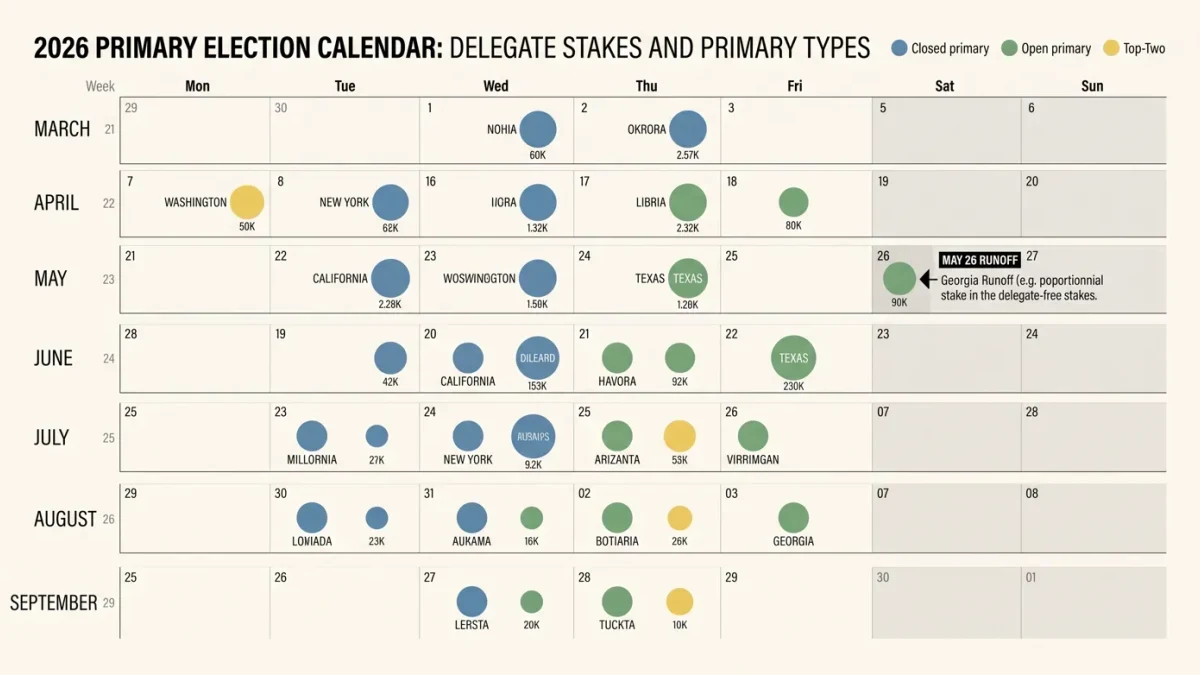
California's primary system works differently from most of the country's: in every statewide primary since 2012, all voters receive the same ballot for partisan offices, the top two vote-getters advance to November no matter their party, and the general election can therefore pit two Democrats or two Republicans against each other with no third candidate on the ballot. Voters adopted this system, called the top-two primary, with Proposition 14 in June 2010, and it first applied to the 2012 elections, per the Secretary of State's records.
With the next statewide primary approaching in June 2026, this explainer covers how the rules work, what changed from the old system, and what the top-two format does to campaigns and voters.
How does a top-two primary actually work?
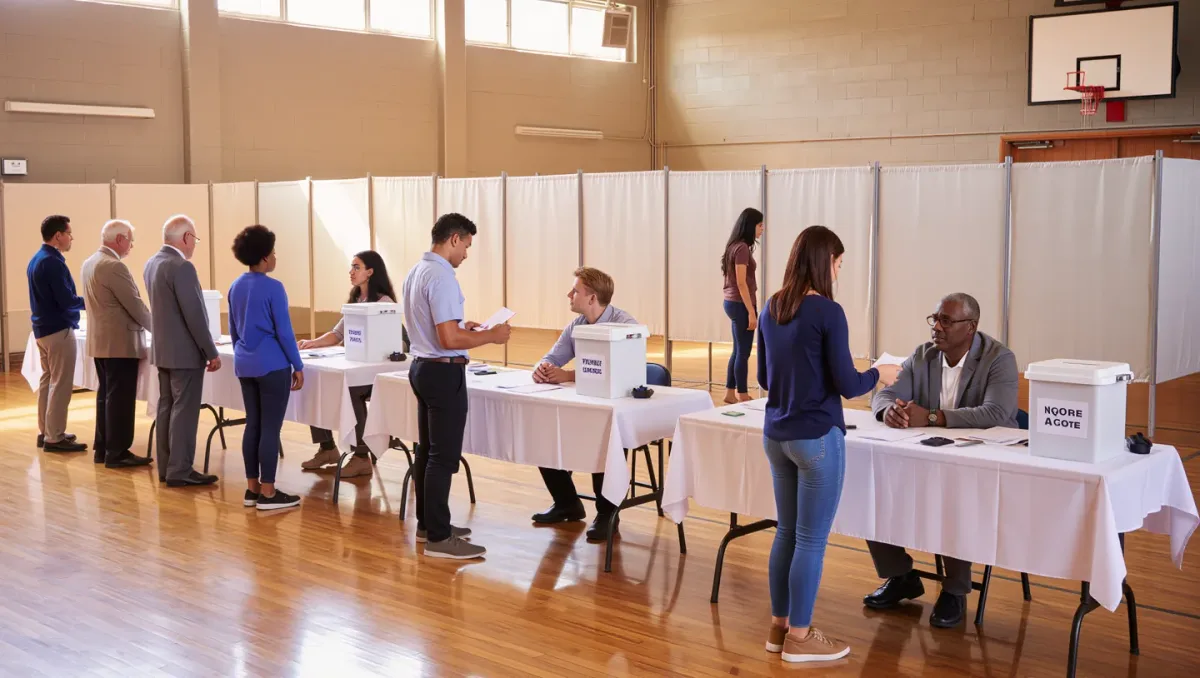
The mechanics are simple. Every contest for a partisan office other than President appears on a single combined primary ballot: US Senate, House seats, the Legislature, and state constitutional offices. Voters choose one candidate per race regardless of the voter's own registration, write-in candidates aside, and the two highest finishers advance. Party affiliation neither gates participation nor guarantees a spot in November; a party's endorsed candidate who finishes third is eliminated entirely.
Two boundary rules matter. Presidential primaries are excluded, so the parties retain their own rules for choosing presidential delegates, and each party decides whether voters registered with No Party Preference may request its presidential primary ballot, which is why NPP voters see different options in presidential years. In non-presidential cycles like 2026, the combined ballot covers the partisan offices below the presidency.
What did the reform change?
Before Prop 14, each party ran its own primary and each party's winner went to November, which in a heavily Democratic or Republican district made the low-turnout May or June primary the real election. The top-two design pushes the decisive moment later and widens it: general elections in safe districts become competitive affairs, often between two members of the same party with meaningful ideological distance, and general electorate, larger and more moderate than a primary electorate, chooses between them.
| Rule | Old system (pre-2012) | Top-two (since 2012) |
|---|---|---|
| Who can vote in the primary | By party registration | All voters, same ballot |
| Who advances | Each party's winner | Top two finishers overall |
| Possible November matchup | One candidate per party | Any two candidates, including same party |
How does it change campaigns?
Candidates strategize around the cutoff. Finishing first matters less than finishing in the top two, so campaigns spend on turnout modeling and opposition research designed to nudge the third-place rival behind a weaker second. Incumbents have occasionally engineered the November field by quietly supporting a fringe second-place finisher, a tactic that survived real use in House races. In districts where one party dominates, the meaningful campaign happens in the general election between two co-partisans, which rewards candidates who can build coalitions beyond the base, and punishes narrow pluralities in crowded primaries.
For voters the practical adjustments are specific: there is no party ballot choice to make for these offices, candidates' party preferences are printed under their names but party nomination is not at stake, and write-ins do not advance unless they surge into second, which has effectively never happened in a statewide race.
The mechanics around the margins
Several secondary rules shape outcomes. Special elections for legislative vacancies use their own two-round format with the same top-two logic on compressed timelines, which is why Sacramento sees a steady churn of special contests between regular cycles. Candidates file fees and nomination papers months in advance, and the Secretary of State certifies the candidate list close to the primary, fixing the field that June voters see. County elections officials, running vote-by-mail processing that now dominates California turnout, canvass results over weeks rather than hours, so second-place margins of a few hundred votes have held the state's attention for much of that period.
Vote-by-mail dominance interacts with the format in a specific way: because ballots postmarked by Election Day count through the following week, campaigns trailing narrowly in early returns have sometimes watched the second-place cutoff flip during the canvass. Political observers have learned to read the county-reported wave of late ballots, and the phrase late ballot has become shorthand in Sacramento for a candidate's fortunes moving after the news cycle moved on.
For third parties and independents the format cuts both ways. Minor-party candidates appear on the same ballot as everyone else but almost never finish second statewide, so they lose guaranteed November visibility their predecessors enjoyed; some now concentrate resources on local races where a strong second is achievable.
Does it do what its sponsors promised?
The reform's sponsors, a bipartisan pair of legislators who put Prop 14 on the ballot with backing from then-Governor Schwarzenegger, promised moderation and more competitive elections. Evidence since runs mixed: scholars studying California elections have documented more competitive November contests and some centrist effects, alongside continued one-party dominance in most districts and the persistence of safe seats. What is undeniable is structural: the June primary and the November general now function as one continuous election in two rounds, and campaigns, donors, and media coverage have reorganized around that fact.
What to watch
Watch the June 2026 results for the same-party runoffs the format produces, particularly in the Legislature's safest districts, and watch turnout: primary electorates still skew older and more engaged, so the June round keeps its filtering power even under open rules. The top-two system did not end California's political geography; it moved the battlefield to November.