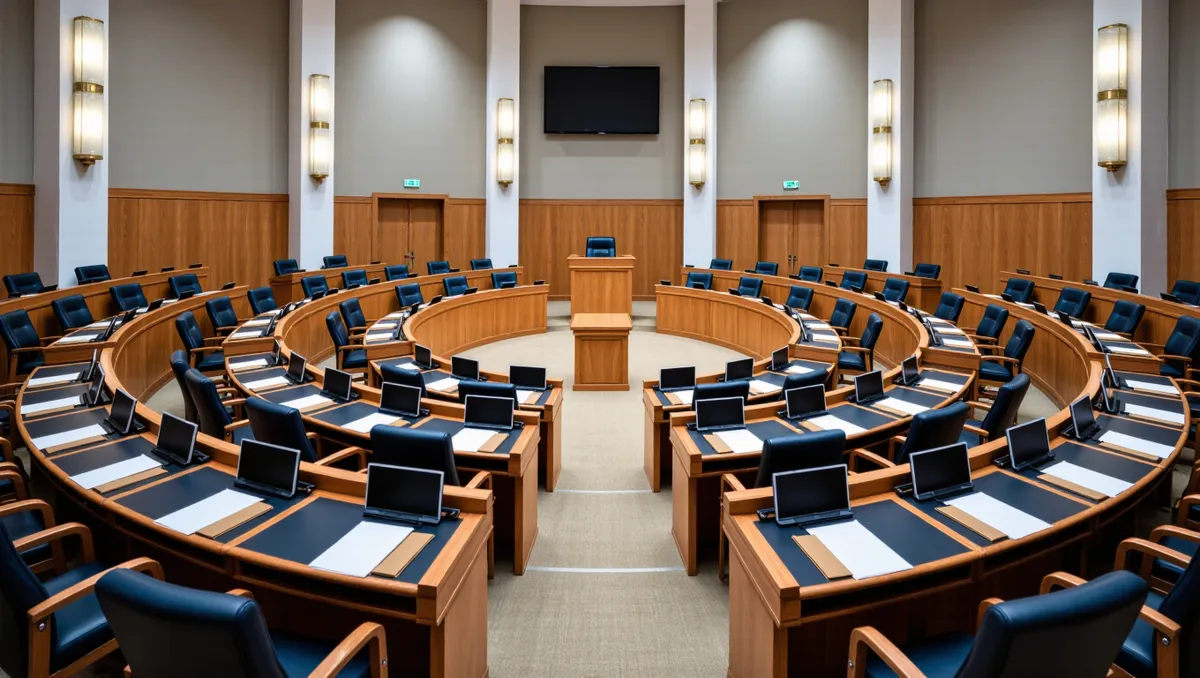
The Assembly Speaker runs the lower house of California's legislature: the gavel, the flow of bills, and the committee assignments that decide which bills live. The office's own appointment page adds state boards and commissions, with more than 200 seats to fill. The job now belongs to Democrat Robert Rivas of the 29th district, elected by the full Assembly.
That is a wide reach, and it still has edges. The Speaker leads one of several power centers in the Capitol, beside the governor, the Senate, and the parties' own floor leaders, and the limits show most clearly in what the office cannot do. Seeing both sides of the ledger explains how a bill really moves in Sacramento.
Who Is the Speaker and How Does One Get the Job?
Majority politics puts the person in the chair. The standard summary describes the Speaker as the presiding officer and highest-ranking member of the Assembly, nominated by the majority party's caucus and elected by the full chamber, typically at the start of each two-year session. Rivas has held the office since June 30, 2023, per the same summary. The office dates to 1849, when the first holder, Thomas J. White, took the chair for a term of barely three months.
What Does the Speaker Actually Decide Day to Day?
Two levers stand out. The first is the flow of legislation, since the Speaker controls which bills move and when. The second is committee assignments, the map that decides whose bill gets a hearing and which members build expertise where. Neither lever requires the Speaker to cast a dramatic vote; the power sits in what never reaches the floor at all. For related coverage, see California's Top-Two Primary, Explained Before the June Vote.
The reach extends past the Capitol's walls. The Speaker's appointments page states that the office holds the authority to appoint members to California state boards and commissions, with more than 200 opportunities to serve. Those seats run prisons to arts councils, and appointees carry out statutory obligations of the state.
What Does the Speaker Not Control?
The second house, for one. The Assembly's leadership page lists the Senate's officers separately, under President pro Tempore Monique Limón, and the Speaker holds no gavel over there. The governor, of course, answers to no legislator. Even inside the chamber, the other floor leaders owe their posts to their own party caucuses, not to the Speaker, per the standard summary.
The succession chart tells the same story in one line. The Speaker stands third in the line of succession to the governor, according to the office summary, behind the statewide officers who would step in first. Power, in this building, is parceled out on purpose. We covered a connected angle in How California Recalls a Governor: The Rules Behind the State's Rareest Election.
How Much Rests on the Majority Behind the Speaker?
Every Speaker owes the chair to a caucus win first. The majority party nominates, the full chamber ratifies, and the other floor leaders are chosen by their own parties according to each party's strength in the chamber, per the standard summary. A large majority makes the nomination close to a coronation. A narrow one turns every member into a swing vote. Either way, the real election happens behind caucus doors, weeks before any floor roll call.
Where Do Californians Feel the Speaker's Choices?
If you follow a bill through the Capitol, you meet the Speaker's fingerprints before you meet the bill. A measure can die when it never gets a hearing, and hearings depend on committee seats the Speaker fills. You also meet the office if you apply for a state board or commission, where the appointments page invites applicants directly. When such a board meets on a rule that touches a license, a job site, or a neighborhood, its members may have arrived there through this one office.
Conclusion: The Power Is in the Gatekeeping
The Assembly Speaker controls less than a governor and more than a title suggests. The office decides the traffic, not every destination: which bills get a hearing, which members sit where, and which Californians fill more than 200 posts on state boards. For a renter waiting on an eviction bill, the Speaker's committee map matters as much as the vote. For a volunteer hoping to serve on a state commission, the path runs straight through the Speaker's office. Both learn the same lesson: in Sacramento, the gatekeeper shapes the law as much as the roll call does.