On paper, Senate Bill 9 remade single-family California: since January 1, 2022, every owner of a lot in a single-family zone near urban services has had the right to split the lot in two and place duplexes on each half — four homes where one stood, approved ministerially, no public hearing required. In practice, per the state housing department's counts and Terner Center research at UC Berkeley, applications statewide have run in the low thousands, and cities from Pasadena to Woodside have spent the law's first years testing how much obstruction objective standards can lawfully contain.
What the law actually allows
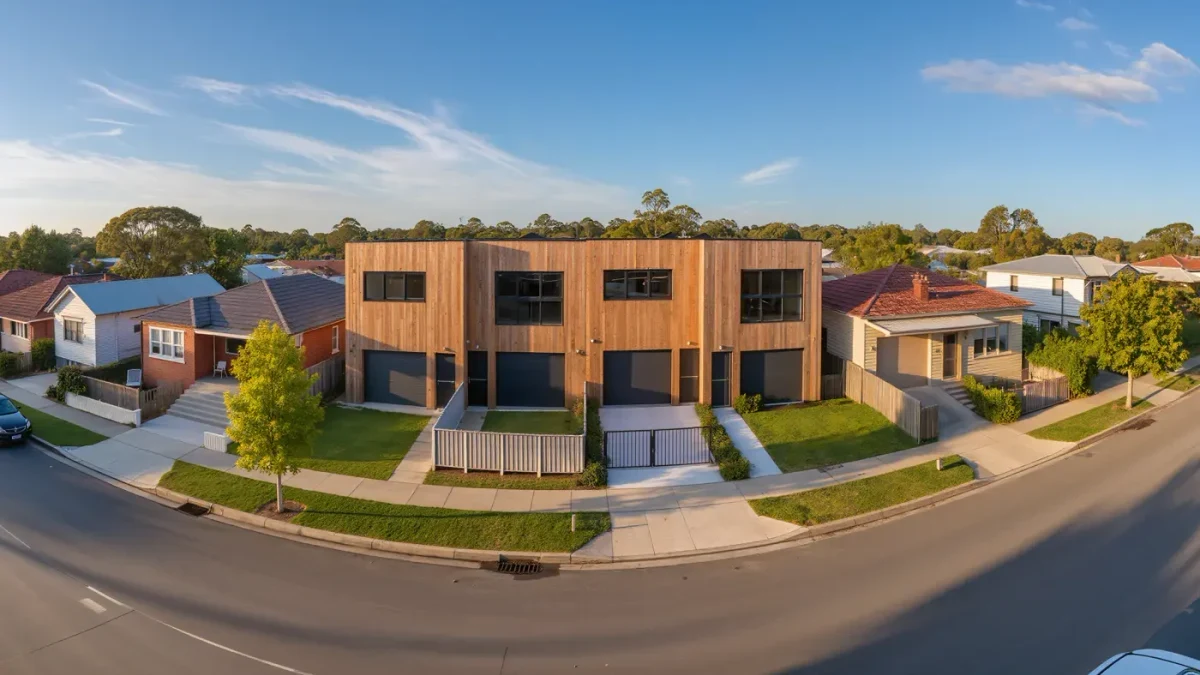
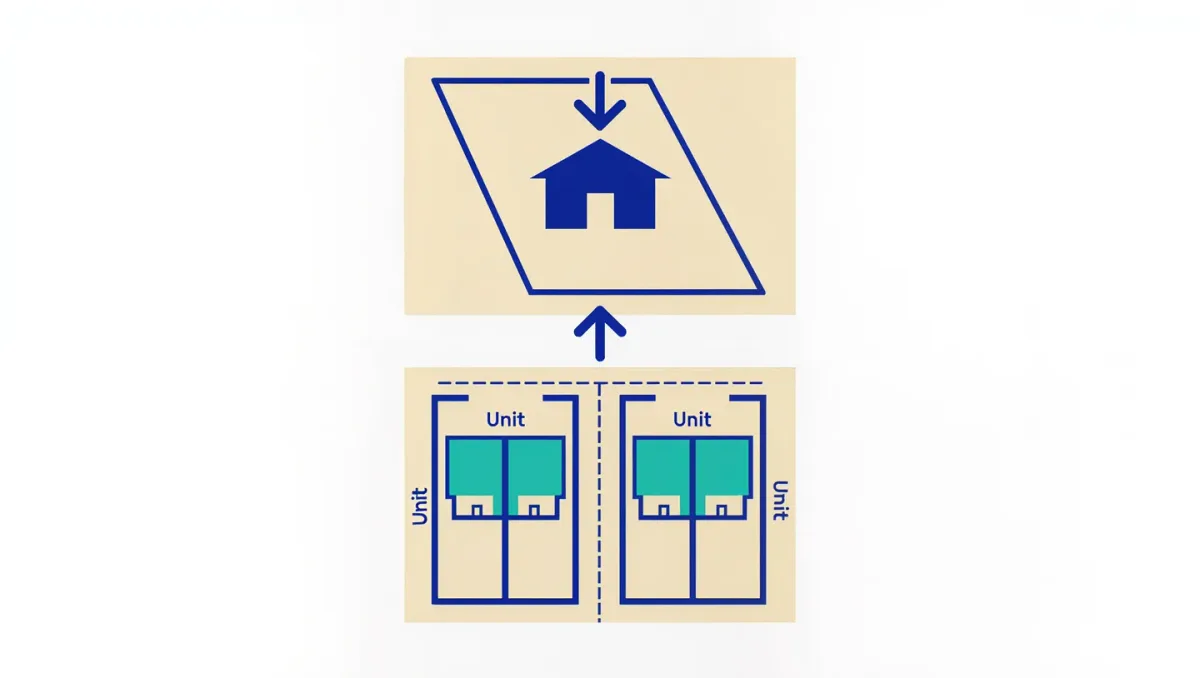
SB 9 has two engines. The urban lot split lets an owner divide a single-family parcel into two, with each resulting lot at least 1,200 square feet and at least 40 percent of the original's size. The duplex provision allows two units on a lot, in place of the one allowed before. Combined, a split lot can legally hold up to four units — though financing, utility capacity and geometry make four-unit projects rare.
The law overrides local growth controls directly: voter-approved measures, charter city rules and neighborhood-specific caps cannot block a qualifying project. The eligibility screens are narrow but real. Lots must sit in urbanized areas or urban clusters per census definitions, not on farmland, wetlands or protected habitat, and not in high- and very-high fire hazard severity zones or designated flood and quake-hazard areas where building codes restrict occupancy. Historic districts and landmark properties are excluded. Owners using the lot-split right must sign an affidavit promising to occupy one of the units for three years — a requirement that has limited investor take-up — and may not have demolished former affordable or rent-stabilized housing on the site.
Approval is ministerial: cities must say yes or no within 60 to 90 days against written objective standards, with no hearings, no CEQA review and no neighbor appeal. Cities can require setbacks, lot coverage limits and design rules — but only if they allow an 800-square-foot unit of at least 16 feet in height, the same floor the ADU laws established.
The resistance playbook
Most large cities complied by writing ordinances that satisfy the letter while shrinking the practice. Common moves include setback configurations that make the required 800 square feet hard to site, parking and fire-access requirements read aggressively, and steep processing fees for the map and parcel merger work a split requires. Pasadena, Redondo Beach and others drew litigation or housing-department scrutiny; appellate courts sided with SB 9 applicants in several 2023-2025 rulings that reaffirmed courts' power to strike pretextual denials, and the Attorney General's housing strike force sent enforcement letters to cities whose standards functioned as bans.
Woodside's attempt to declare itself mountain-lion habitat for exemption purposes became the emblematic episode — quickly reversed after national attention and a state letter. The pattern the Terner Center documented is quieter: eligible, technically possible projects that never get filed because the arithmetic of setbacks, fees and appraisal values does not close.
How a split gets done, step by step
A completed lot split follows a sequence worth knowing because each stage can stall. First comes eligibility screening against the statute's maps — urbanized-area status, hazard zones, historic designations. Second, the application: parcel map or tentative map filed with the city, processed ministerially on the statutory clock. Third, the physical work — survey, utility separation where the city requires independent connections, new address assignments — and finally the recorded map that creates the second parcel. Applicant reports put the timeline at 6 to 18 months and total soft costs frequently past $75,000 before construction, with map fees and utility separation the two most disputed line items.
The duplex provision alone, without a split, is far simpler: two units on the existing parcel, permitted like an addition, and frequently combined with the state ADU entitlements — a house, an attached duplex conversion and up to two ADUs can stack on a single lot where standards align. That stacking, more than the headline fourplex, is how most SB 9-adjacent projects actually pencil.
Why uptake stays low
The economics explain more than the politics. Splitting a lot requires surveying, mapping, utility laterals and a new parcel — costs commonly reaching $100,000 before vertical construction — while appraisal data for half-lots barely exists, which chokes construction lending. Owner-occupancy rules screen out the developers most willing to absorb that risk. The result, visible in permit data through 2025, is a law that functions mainly as a backstop: a right that exists, gets used hundreds of times a year, and reshapes expectations more than skylines.
Where it has worked, the pattern is consistent: strong-market neighborhoods near transit, owners with equity and patience, and cities that wrote compliant-but-humane ordinances. Palo Alto and San Diego processed meaningful application volumes relative to their peers, per city reports, and each approved split creates two legally buildable lots that survive future councils.
What to watch
Watch the litigation docket — courts are converting the law's ambiguities into precedent, generally in favor of builders — and the state housing department's enforcement letters, which set the practical limits of the resistance playbook. The longer-term signal is appraisal and lending: the first mainstream lender products for lot-split construction would change the uptake curve faster than any new statute. SB 9 answered whether California could legalize fourplexes by right. The open question is whether the market can finance them.