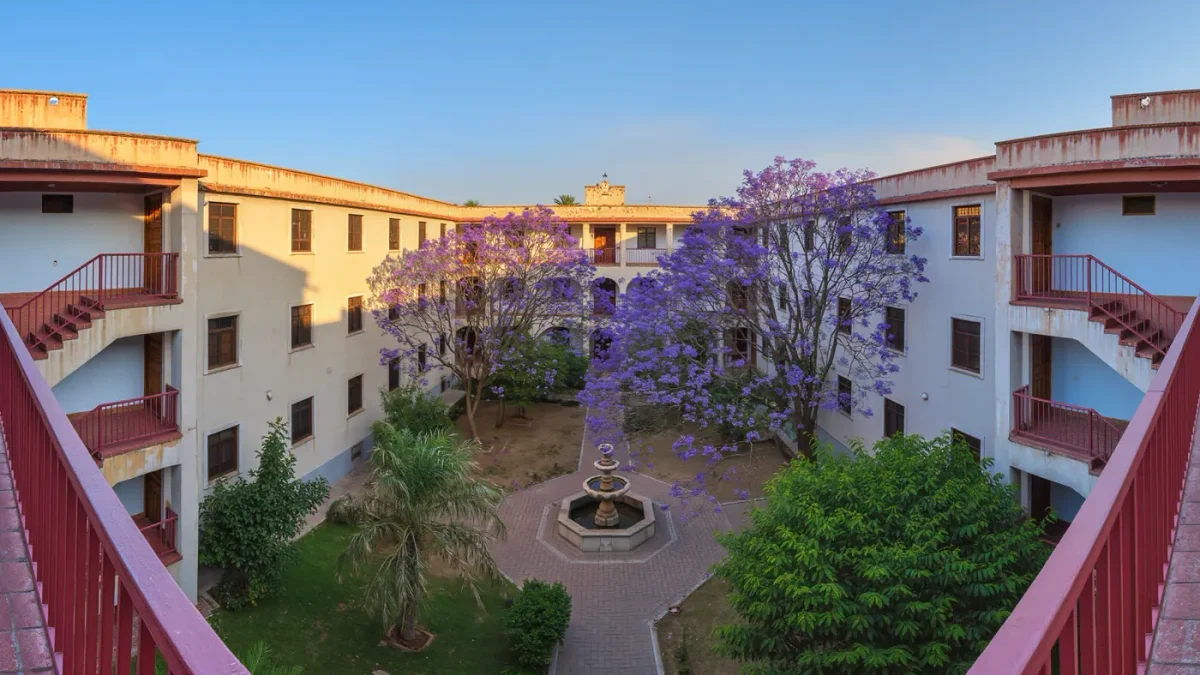
The bus rapid transit line in the photo cuts through a corridor of single-story commercial strips and low-slung apartment blocks — precisely the geography Senate Bill 10 was written for. Since January 2022, any California city or county has been able to rezone parcels within a half mile of major transit for up to ten units of housing per lot, by simple council vote or citizen initiative, with the environmental review normally required for such rezonings exempted. Five years on, the law's defining feature is its roster of adopters: a handful of cities, with the largest — Los Angeles, San Jose, Oakland — still debating or litigating.
What the law offers, precisely
SB 10 is an opt-in, which distinguishes it from every mandate-era housing bill. It does not rezone anything itself; it grants local governments a tool. A city that votes to use it may set a floor of up to 10 residential units per parcel in two kinds of territory: transit-rich areas within a half mile of rail, ferry or bus rapid transit, and urban infill sites. The rezoning is exempt from CEQA, the environmental review process whose multi-year timelines have killed or delayed many corridor upzonings. A second clause exempts qualifying 100-percent-affordable projects of up to 10 units from CEQA anywhere in the state.
The law carries guardrails designed to defuse opposition. It cannot apply to parcels with existing rent-stabilized or last-deed-restricted affordable housing, historic resources, or sites where housing was demolished in the past 15 years — protections meant to bar replacement of existing affordable homes. Cities keep full control over height, design and objective standards on top of the unit-count allowance, which is also why SB 10 upzoning can look less transformative on paper than its ten-unit headline.
The adoption record, and why it is thin
Ballot measures gave SB 10 its second door: because the law authorizes initiatives as well as council votes, neighborhood and housing coalitions can put corridor upzonings on the ballot where councils stall, an inversion of the usual initiative pattern in which growth controls, not their repeal, reach voters. The tool's market value depends on where cities point it. Berkeley became the early mover, voting to study SB 10 maps for its transit corridors; Sacramento and several smaller cities adopted limited versions; but the big-city deliberations ran into a procedural wall — in Los Angeles, the council's SB 10 framework drew a CEQA lawsuit from neighborhood groups testing whether the law's exemption covers upzonings that displace no one but change everything for opponents, and similar challenges have slowed other councils.
The deeper reason is political arithmetic. SB 10 asks councils to take a yes vote on density — a recorded position, campaign-visible — in exchange for a state gift the city was not forced to accept. Housing elements under SB 8 and 10's cousin laws already obligate cities to zone for their regional need, so many planners view SB 10 as a way to concentrate that required zoning near transit rather than spread it to the urban edge. Cities that see it that way tend to adopt; cities that already met their numbers do not.
What the ten-unit ceiling would build
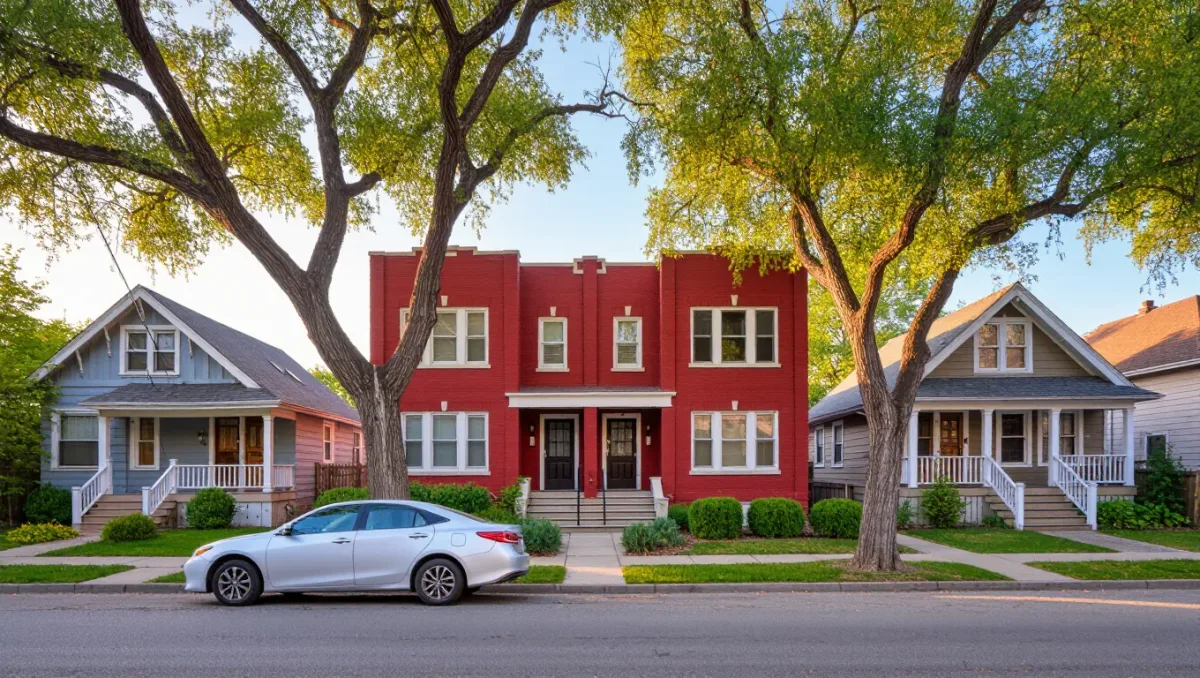
Applied along a real corridor, the allowance is modest but cumulative: parcels that hold one house or a strip of auto-oriented commercial become eligible for small apartment buildings — stacked flats, six-plexes, courtyard housing — the so-called missing middle that postwar zoning eliminated. Analysts at Terner and other centers have noted the pattern from international comparables: mid-rise corridors near frequent transit deliver more units per infrastructure dollar than scattered towers, and SB 10's half-mile geography targets exactly that band.
The constraint is financing. Small multifamily buildings face construction lending costs per unit that penalize the 6-to-12-unit scale, and lenders remain conservative in cities whose councils might reverse-course. Where a corridor upzoning survives a full cycle — zoning adopted, some projects financed, occupancy — appraisal data follows, and the market normalizes. That sequence has not yet run in any major California city.
The CEQA fight in context
The environmental review exemption is the law's true prize, and the litigation around it is a proxy war over CEQA itself. California's environmental review law requires agencies to study and mitigate significant effects of projects and plans, and housing advocates have documented for two decades its use as a delay instrument — opponents of a corridor upzoning rarely allege air quality impacts so much as demand studies whose timelines outlast council terms. SB 10's exemption short-circuits that instrument for rezonings that add homes on infill and transit land, and its challengers argue the exemption itself violates CEQA's constitutional framework — an argument lower courts have so far largely rejected, with appeals continuing.
The philosophical split runs through the legislature as well. Environmental groups divide between those treating infill density as climate policy — the state's own climate scoping plan calls for shifting travel toward transit-served neighborhoods — and those wary of exempting any project category from review. SB 10 passed in 2021 on slim votes with that split unresolved, and it remains unresolved in every subsequent session's CEQA-reform attempts.
What to watch
Watch three markers: the outcome of the CEQA litigation, which decides whether the exemption is worth having; whether Los Angeles or San Jose adopts SB 10 maps, which would triple the law's potential reach overnight; and the housing-element compliance reports, which show whether cities concentrate required zoning on transit corridors — with or without formally invoking SB 10. The law's authors wanted a template as much as a statute. The template is still waiting for its largest adopters.