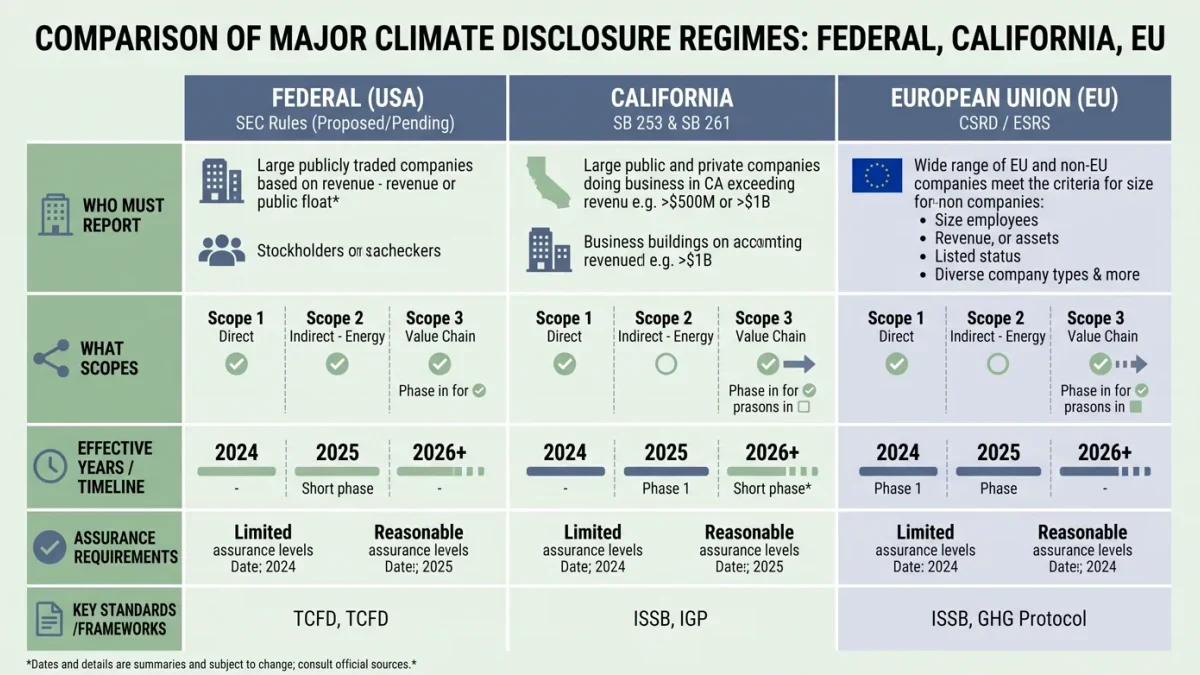
The California Air Resources Board approved the initial version of its corporate climate disclosure regulation at a public hearing on February 26, 2026, a milestone in the state's implementation of SB 253, the 2023 law requiring large companies doing business in California to report their greenhouse gas emissions, per CARB, February 26, 2026.
The action matters far beyond Sacramento. Because the rule covers companies based anywhere that cross revenue thresholds tied to their California activity, disclosure reports filed under it will reach boardrooms in other states and countries. This article reports on regulation, not compliance advice.
What does the rule require?
SB 253 directs covered companies to report scope 1 and scope 2 emissions, the categories covering direct operations and purchased energy, with scope 3 reporting, covering supply chains and product use, phasing in later. The regulation adopted on February 26 sets the reporting forms, deadlines, and a fee component that funds CARB's administration of the program.
Reporting runs through CARB's electronic system, and the first-year deadlines set in the initial regulation determine which fiscal years companies must cover. Businesses above the revenue threshold that fail to file face administrative penalties under the statute.
Why California is doing this
Lawmakers designed SB 253 to give investors, customers, and the public a standardized view of corporate emissions the way financial disclosures standardize earnings. California's market size gives the rule reach: thousands of companies that sell into the state fall inside its thresholds, an effect policy analysts compare to earlier California auto emissions standards that reshaped national practice.
The board's February session also heard public comment on reporting burden, with business groups pressing for streamlined forms and environmental organizations arguing for faster scope 3 timelines. CARB can revise the regulation through subsequent comment periods.
How this fits with other climate rules
The disclosure program sits alongside California's cap-and-invest program, which prices emissions for covered industries, and SB 261, a separate 2023 law on climate-related financial risk reports. Companies covered by multiple programs must reconcile the timelines themselves or through their auditors.
What to watch
The first reporting cycle deadlines, and any 15-day comment period changes CARB publishes that adjust forms or fees. Both will show how heavy the compliance lift turns out to be in practice.