Opening a California brewery starts with the Alcoholic Beverage Control department and a license type that fits the plan. A production brewery under 60,000 barrels a year files for a Type 23 small brewer license; bigger plants need Type 01. The main choice is whether to brew for taps, for stores, or both.
The license a brewery picks sets what the business can be. One type covers a plant that ships kegs and cans to wholesalers. Another covers a restaurant that brews in the back. The department investigates every applicant and every site before a license issues. Readers following this should also see What the Minimum Wage Machine Looks Like From a Small Business.
Which License Does a Brewery Need?
The line runs at 60,000 barrels a year. A brewery producing fewer than that files as a small beer manufacturer, the Type 23, while larger plants hold the Type 01. The department describes the two as generally alike in privileges. The real differences sit in fees and in the right to share a common licensed area under specific circumstances.
The small brewer license carries a privilege that matters in a taproom economy. A licensee may sell beer it produced and packaged to consumers, for consumption off the premises, at the site where it brews. The department notes that micro-breweries and brewpubs are the license's most common users, and describes a micro-brewery as generally producing about 15,000 barrels a year, mostly for local and regional markets. The state draws one line below the industry: a person may brew up to 100 gallons a year for personal use, with a 200-gallon household cap.
What If You Want to Brew Behind a Restaurant?
Then the Type 75 brewpub-restaurant license is the fit. It goes to restaurants, and it allows beer, wine and distilled spirits to be served in a bona fide eating place, plus a limited amount of brewing. If your plan is a kitchen first and a brewhouse second, this is the license that matches it.
The department treats the Type 75 as a retail license with a brewing privilege, not a true manufacturer license, and the gap matters at scale. The brewpub may sell its own packaged beer to go. Minors are allowed on the premises, which changes who can sit in the room while the tanks run.
What Does It Cost, and How Long Does It Take?
Costs arrive in two parts. An application fee is charged when the paperwork goes in, and it is generally non-refundable. An annual fee keeps the license active, and the first year's fee is due at application. That first-year payment is the refundable one: if the application is withdrawn or denied, the money comes back. We covered a connected angle in California's $350 Billion Budget: Where the Money Comes From.
The amounts move every year. The department may raise license fees annually by no more than inflation, and effective January 1, 2026 it applied an increase of 2.72 percent, rounded to the nearest five dollars. One more clock runs before opening day. Every alcohol server and manager at these license types must hold a Responsible Beverage Service certification.
Where Do the Quotas Come In?
Manufacturing licenses are open, but retail is rationed. The number of General licenses, the full beer-wine-and-spirits retail types, is limited by each county's population, and new ones are issued once a year through a public lottery the department calls the Priority process. A brewery that stays on the manufacturing side never enters that queue. If you want a full bar alongside the brewhouse, the lottery is part of your timeline.
Breweries that pour at festivals route around another wall. A Type 91 caterer's permit attaches to a manufacturer's license and covers one-day events, filed alongside the Type 77 event permit and similar event authorizations.
Conclusion: What the License Means on a Taproom Night
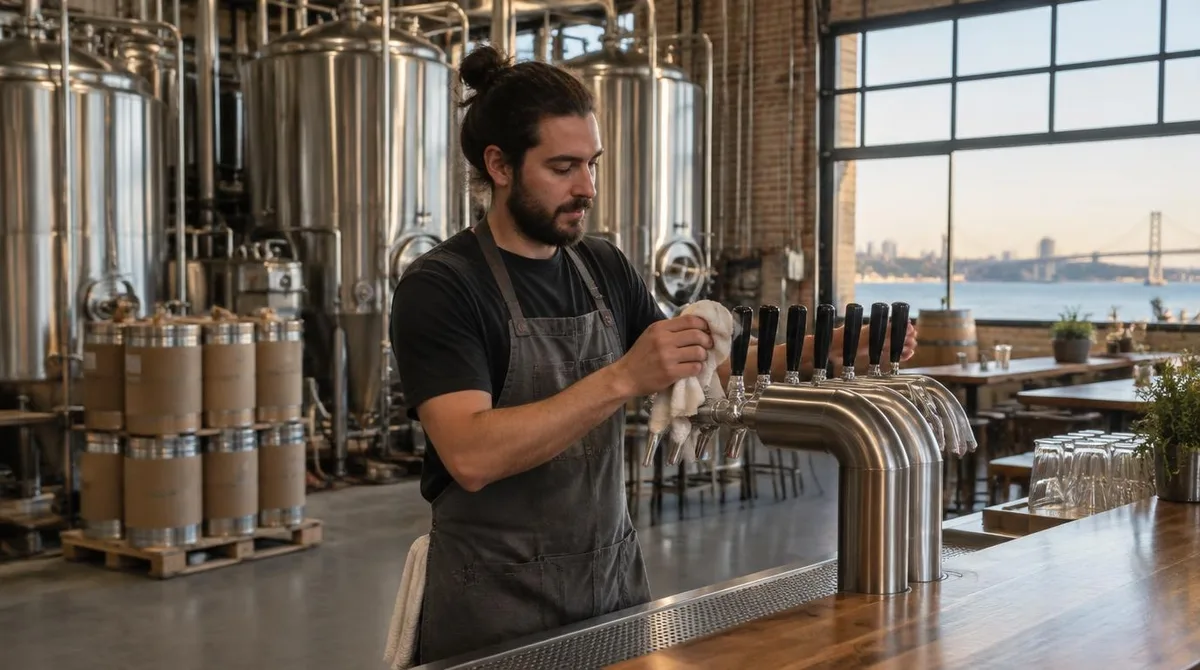
The paperwork decides what a visitor sees. At a Type 23 plant, the fridge case by the tanks is the retail arm, and the kegs going out the dock feed bars across the state. At a Type 75, the brewer works in a room where minors sit legally at the next table. And for the server pouring the last round, the RBS certificate she holds is the license behind the license.