Two neighbors in Sacramento live in identical houses. One bought in 1998 for $165,000 and pays under $2,000 a year in property tax; the other bought the matching house next door in 2023 for $620,000 and pays about $7,000. Both bills follow the same law: Proposition 13, the 1978 tax limitation that caps rates, caps assessment growth and reassesses only on change of ownership — the rules that have governed every California property tax bill for nearly five decades.
This site publishes information, not financial or legal advice. Assessment questions turn on individual facts, and county assessors' offices administer the specifics.
The three mechanical rules
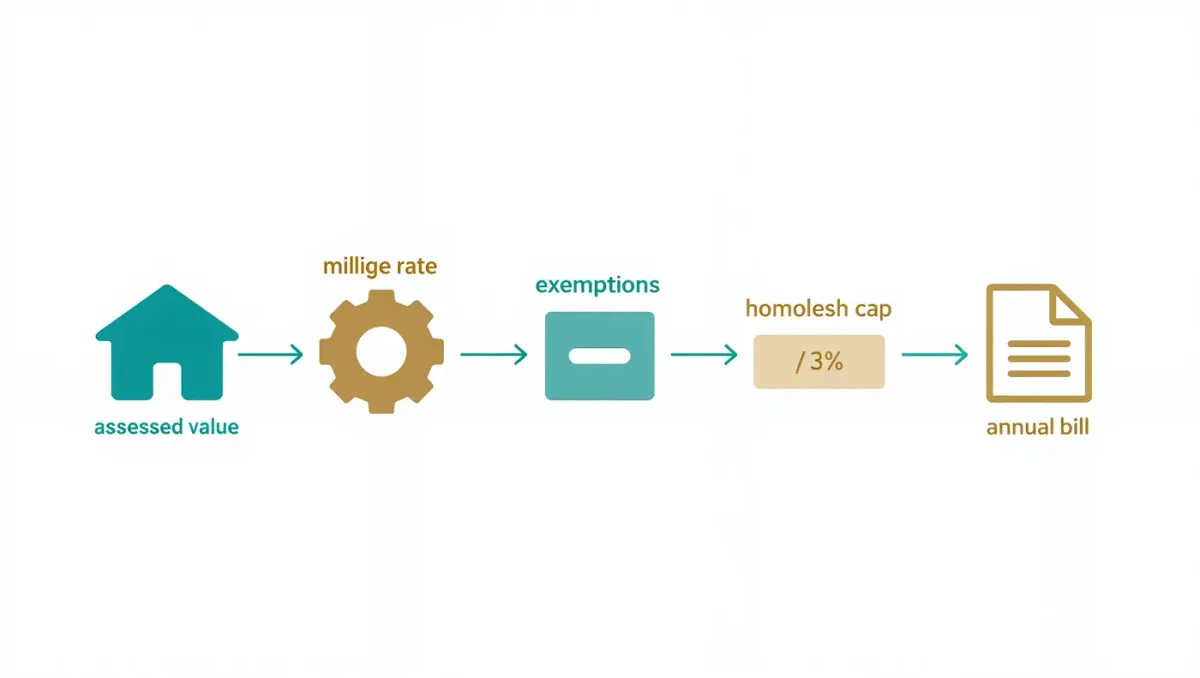
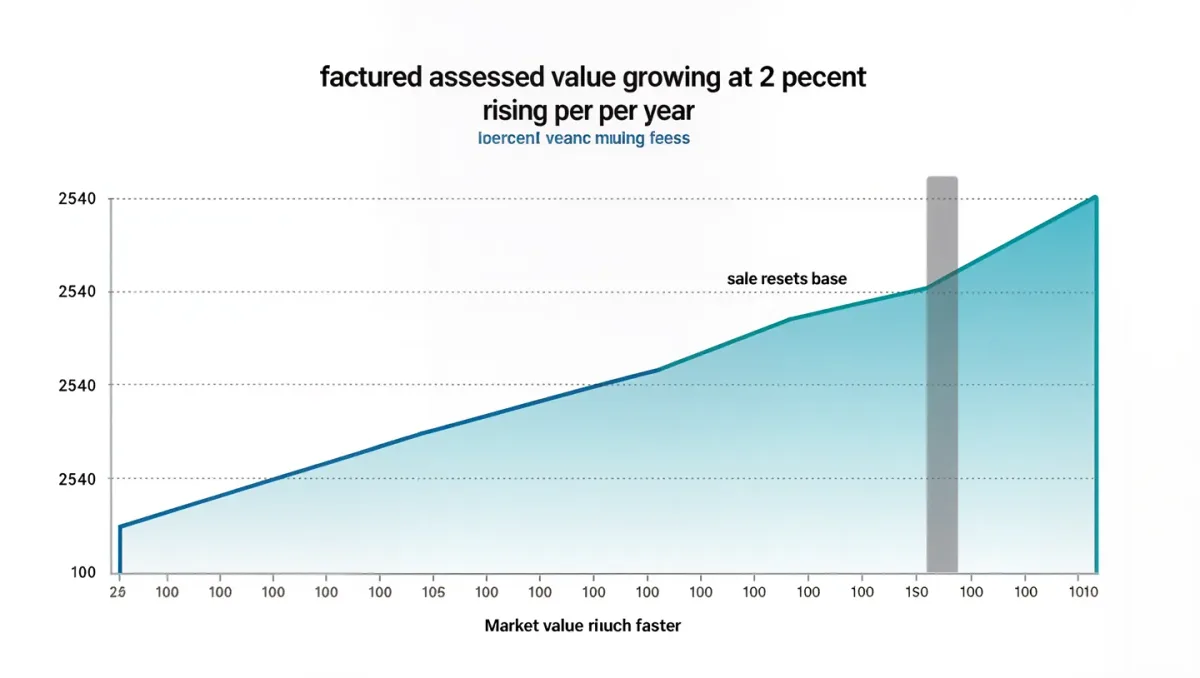
Proposition 13 did three things, all still in force. First, it set the maximum ad valorem property tax rate at 1 percent of assessed value, plus voter-approved debt like school bonds — which is why a “Measure X” bond appears on every property tax bill. Second, it capped the annual growth in assessed value at 2 percent, regardless of what the market does. Third, it requires reassessment at market value only when a property is sold or substantially new construction occurs, resetting the tax base to the purchase price.
The result is the neighbor contrast above: California's average effective property tax rate runs around 0.7 to 0.8 percent of market value — below the national average near 1 percent — but the burden inside the state varies enormously by purchase year. Assessment rolls show properties taxed at a small fraction of current market value everywhere prices rose faster than 2 percent a year, which is most places most decades.
When market values fall, a second mechanism applies. Under Proposition 8 — the 1978 companion measure, not the 2008 marriage initiative — assessors must temporarily reduce assessments below the factored base when market value drops under it, restoring the higher base when values recover. Every housing downturn produces a wave of informal Prop 8 reductions; every recovery quietly returns owners to their original base.
The transfer rules, rewritten in 2020
Who inherits the low tax base matters as much as who buys. For decades, parents could transfer property to children with the assessed value intact, and owners over 55 could move their base value to a replacement home in the same or a cooperating county. Proposition 19, narrowly passed in November 2020 and effective in stages through April 2023, rewrote both rules: the 55-plus base transfer now works statewide and up to three times, but the parent-child exclusion was gutted — children inherit the low base only for a primary residence worth up to $1 million above the original assessed value, and never for vacation homes or rentals.
The effect was intentional. Prop 19's supporters framed the change as closing a loophole on inherited investment property to fund the expanded senior protections; estate planners spent 2021-2023 racing transfers under the old rules before the April 2023 cutoff.
What Prop 13 costs and who it protects
The fiscal trade is the core of every reform debate. Because assessments lag market values, local governments raise rates on debt measures and rely more on sales tax and state subventions than counterparts elsewhere, and each reassessment-free year compounds the loss. A 2020 attempt to exempt commercial property from the cap — the split-roll Proposition 15 — failed with about 48 percent of the vote, leaving the reform movement without a win since 1978.
The protections are equally measurable. Academic studies, including work from Stanford and UC researchers, find the system sharply reduces moving among long-tenured owners — the lock-in that keeps property taxes predictable — and shields fixed-income households from the state's price volatility. Surveys have shown Proposition 13 remains among the most popular measures in California political history, which is why every repeal attempt since 1978 has failed.
What an assessor's office does all year
The system runs on 58 county assessors. Each produces an annual roll — the inventory of every taxable parcel and its assessed value — by factoring existing base values up 2 percent, adding new construction, processing ownership changes recorded by county clerks, and auditing thousands of commercial assessments under state-required programs. Owners who disagree with an assessed value file an appeal with the county assessment appeals board, with filing windows generally running from July through September, and hundreds of thousands of Prop 8 applications processed in downturn years.
Special assessments and parcel charges complicate the simple story. Mello-Roos districts, school community facility districts and 1915 Act bonds add line items far above the 1 percent base in newer suburbs — a tract home in Elk Grove or Rancho Mission Viejo can carry an effective total rate several times the constitutional minimum. Buyers in newer developments read the tax bill's installments, not just the rate, before assuming the Prop 13 promise.
What this changes for a California reader
For an owner, the practical points are: your assessed value grows at most 2 percent a year; your bill includes voter-approved debt beyond the 1 percent; a decline in market value may qualify you for a temporary Prop 8 reduction you must sometimes request; and selling resets everything for your buyer. For a renter, Prop 13 arrives indirectly — through a tax system that leans harder on income and sales taxes, and through the lock-in that thins the resale market.
Watch the next split-roll attempt and the assessors' annual roll reports, which show how far assessments trail market values in each county. That gap — not the rate itself — is the number that decides who really pays California's property tax.