The letter usually arrives after a non-renewal: the insurance department's notice that a homeowner rejected by the standard market can apply to the California FAIR Plan, the wildfire-exposed insurer of last resort. Stanford researchers reported in early 2026 that the plan covered about 5 percent of the state's single-family homes, up from 1.5 percent in late 2020 — growth that turned a little-known backstop into the instrument that absorbed the January 2025 Palisades and Eaton fire losses for thousands of Los Angeles households.
This site publishes information, not financial or legal advice. Coverage decisions, eligibility and claim disputes turn on individual policy language and California Department of Insurance rules.
What the FAIR Plan is — and is not
The plan, created by the Legislature in 1968 after the Bel Air and Santa Ana fires, is a private association of all licensed property insurers in the state, operating under Department of Insurance oversight. It is not a state agency and not a welfare program: policyholders pay premiums set to cover expected losses, and in exchange receive fire coverage when the voluntary market declines to write them.
Its limits matter more than its name suggests. The plan historically covered fire and smoke damage with reduced options for the perils a standard homeowner policy bundles — liability, theft, water damage — which is why most FAIR Plan policyholders buy a separate difference-in-conditions policy from a surplus-lines carrier to fill the gaps. Residential coverage limits, once capped at $3 million per location, strained against Pacific Palisades replacement costs where rebuilding runs well above $1,000 per square foot. The plan also imposes its own underwriting standards: properties must meet basic wildfire mitigation expectations, and inspectors can require clearing of brush within a set distance before binding or renewing coverage.
How the money works when a catastrophe hits
The plan's financing is the part every California household should understand, because it is mutually owned by the market. When claims exceed the plan's own reserves and reinsurance, the plan levies assessments on its member insurers in proportion to their share of the state market. After the Palisades and Eaton fires, which overwhelmed the plan's finances, the Department of Insurance authorized a member assessment of $1 billion in February 2025 — and permitted the insurers to recover half of it through a temporary surcharge on virtually all property policyholders statewide, per the department's order.
That surcharge is the plan's quiet reach: a homeowner in Eureka with no wildfire exposure at all helps fund losses in Pacific Palisades. The design is deliberate. Spreading catastrophic losses across the insured public is cheaper than letting the backstop collapse, and the same mutual-assessment structure funded recoveries after the 1991 Oakland hills fire and the 2017-2018 wildfire years.
Why the plan grew so fast
The plan's expansion from backstop to mass-market insurer tracks the retreat of the standard carriers. Between 2019 and 2024 the plan's policy count roughly tripled past 400,000, per its published statistics, as major insurers paused new business, tightened underwriting and non-renewed policies in brush-risk zones citing loss ratios that rate approvals had not kept pace with. The January 2025 fires, which rank among the costliest wildfire events in United States history with insured losses estimated in the tens of billions, accelerated the retreat: State Farm sought emergency rate relief, and the department's subsequent negotiations over rates, reinsurance and carrier commitments continued the pattern into 2026.
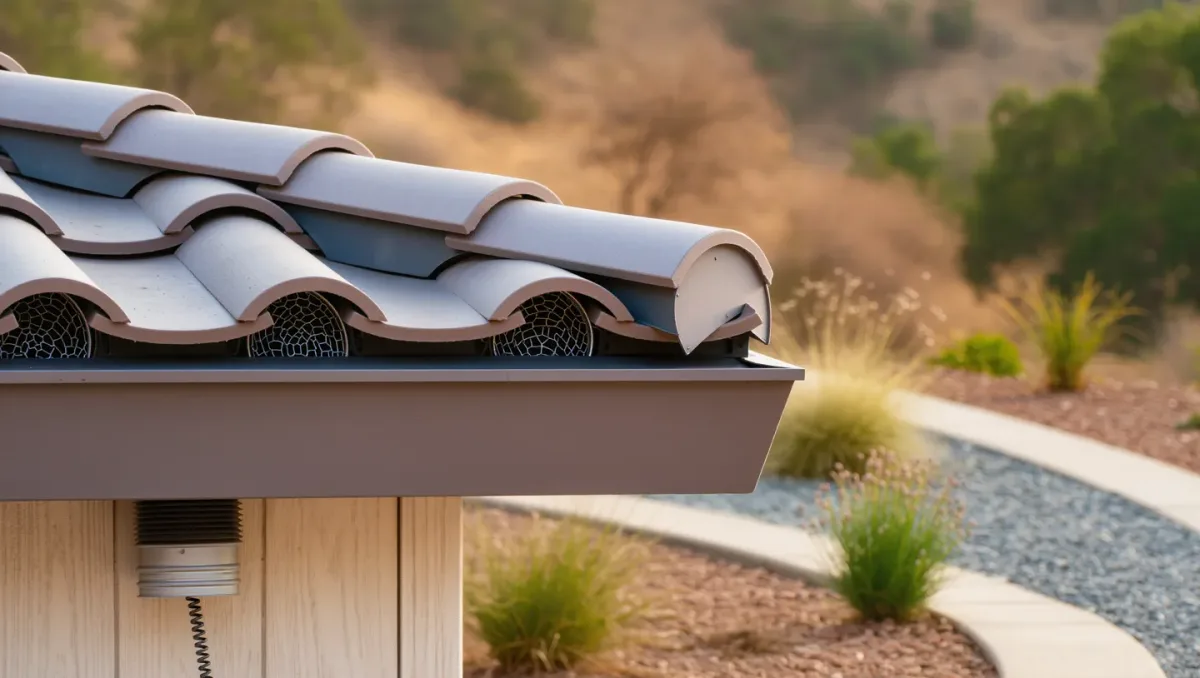
Reinsurance costs compounded the retreat: global catastrophe reinsurance pricing spiked after consecutive record-loss years, and plans and carriers passed a share through to premiums. Policy responses have tried to slow the migration. The Sustainable Insurance Strategy rolled out by the department since 2023 allows forward-looking catastrophe modeling in rate filings and lets insurers write in exchange for expanding in underserved areas. The Safer from Wildfires framework entitles homeowners to premium discounts for defensible space, Class-A roofs, ember-resistant vents and other hardening — discounts the FAIR Plan also must honor.
What a policyholder actually buys
A FAIR Plan application goes through a licensed broker or directly to the plan, and underwriting focuses on the structure: distance to brush, roof class, updated wiring, and replacement cost estimate. Premiums in high-risk zones commonly run several thousand dollars a year, and the difference-in-conditions wrap that most owners add can double the total — a combined burden that functions, in wildfire country, as a second mortgage payment. Payment plans and escrow billing through lenders are available, and mortgage lenders will not close on an uninsured home, which is why the plan's availability underwrites property values as much as property itself.
Claims handling after the 2025 fires put the plan's operations under scrutiny. The department pressed carriers on advance payments, smoke-damage documentation standards, and deadline extensions; legislation from prior years already required wildfire survivor protections, including mandatory advance living-expense payments and moratorium limits on non-renewals in declared disaster areas.
What this changes for a California reader
For a homeowner in a brush-risk area, the practical sequence is: document your home's hardening before shopping, disclose it, and if non-renewed, apply to the FAIR Plan before coverage lapses while also pricing a difference-in-conditions wrap. For a homeowner anywhere else, the plan's assessments mean wildfire insurance risk is already partly mutualized into your premium.
Watch the Department of Insurance's rate filings calendar, the plan's quarterly statistics page, and the legislature's recurring proposals to create a public catastrophe fund on the model of the earthquake authority. The FAIR Plan was designed to be small. Whether it returns to that role is now a market-wide question.