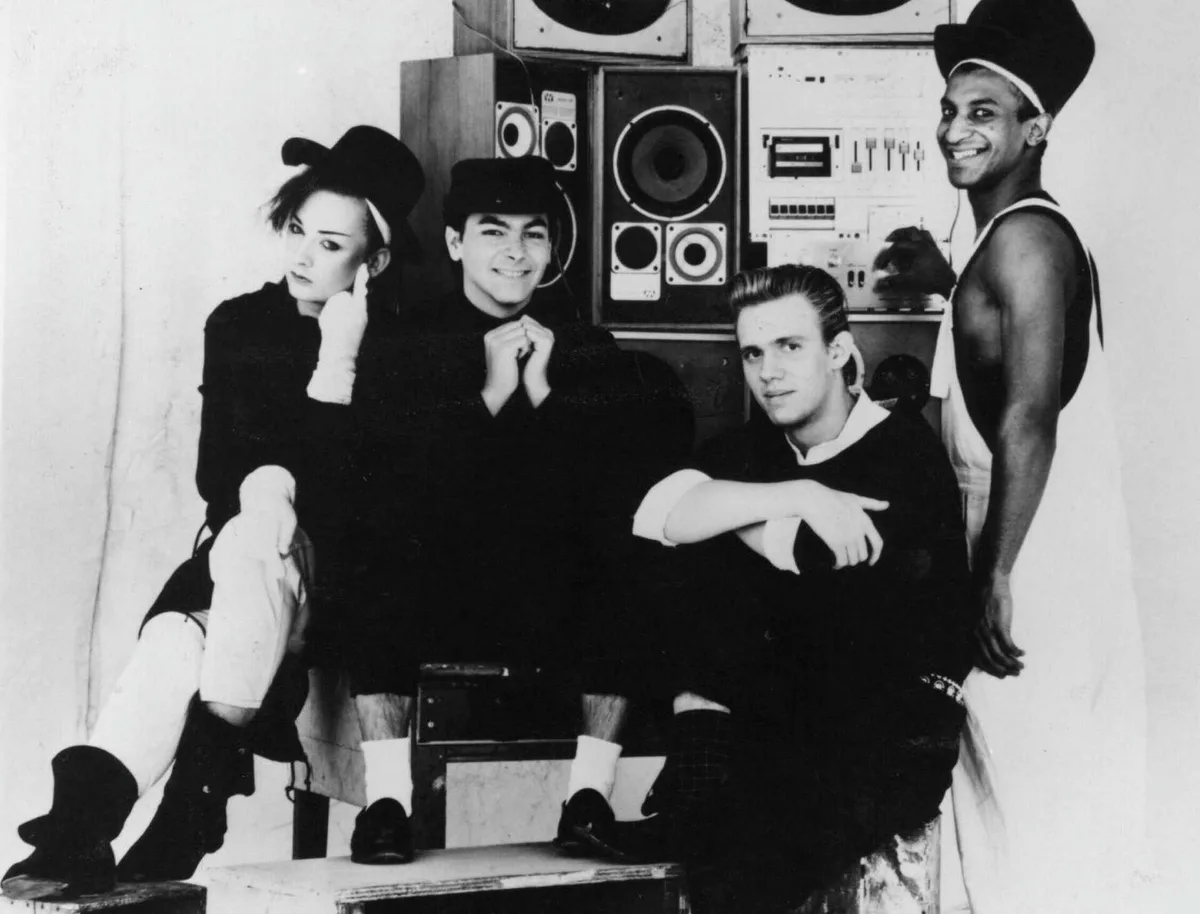
Culture Club changed pop by proving that an image could be as powerful as a song. The band, fronted by Boy George, blended reggae, soul and new wave into radio-friendly pop while presenting a look that mainstream audiences had never seen on their TV screens. Forty years on, the band's influence shows up in pop's approach to style, gender presentation and genre-mixing.
Dictionary.com defines "enduring" as lasting, permanent, something that stands the test of time, and that is the right frame for this band's footprint. According to Dictionary.com, the word describes a poet of "enduring greatness" — quality that persists rather than fades. Culture Club's legacy qualifies on those terms: not because the band dominated any single year, but because later artists keep reaching for the ideas it introduced.
This retrospective looks at what the band actually did, how the sound worked, why the image mattered so much, and what today's pop scene owes to it. The culture desk covers pop history often, and few stories reward the long view like this one.
Who was Culture Club, and why did the band stand out?
Culture Club formed in London in the early 1980s, built around singer Boy George, guitarist Roy Hay, bassist Mikey Craig and drummer Jon Moss. The band stood out for a simple reason: no one on mainstream pop radio looked or sounded quite like them. Boy George sang in a warm soul voice while wearing braided hair, hats and makeup that blurred the line between masculine and feminine dress.
The band's name itself was a statement. It pointed at the mix of backgrounds and musical traditions inside the group — two Black musicians from different musical lineages, an Irish-English singer and an English guitarist. In an era when pop acts were often packaged as uniform, Culture Club made its differences the whole point.
The sound matched that mix. Rather than playing straight rock or straight synth-pop, the band folded reggae rhythms, Motown-style melodies and American soul phrasing into bright, hook-heavy pop songs. Listeners who knew nothing about those traditions still heard something fresh.
What made the sound work on radio?
Culture Club's songs were built on craft that survives any era: strong melodies, clear choruses and arrangements that left room for a voice. Hits like "Do You Really Want to Hurt Me" and "Karma Chameleon" paired melancholy or uncertainty with bright, danceable backing. That contrast — sad words, sunny sound — became a template countless pop writers have used since.
The reggae influence deserves special note. British bands had borrowed Jamaican music before, but Culture Club brought it to the widest possible pop audience without stripping out the feel. Slow, loping rhythms sat under melodies that a first-time listener could hum after one play. That balance between groove and accessibility is hard to pull off, and it is a large part of why the songs still get played.
Boy George's singing tied it together. He borrowed phrasing from soul singers and delivered it with theatrical restraint, never pushing a note further than the song needed. Later pop vocalists learned from that economy.
Why did the image matter as much as the music?
In the MTV era, what an artist looked like on screen could matter as much as what they sounded like. Culture Club understood this earlier than most. Boy George's androgynous presentation — makeup, ribbons, loose smocks — was not a costume for a video shoot. It was the band's everyday identity, and it reached millions of households at a moment when television was pop's main stage.
The impact ran in two directions. First, it widened what mainstream audiences would accept from a pop star. Second, it gave young viewers who did not fit conventional molds a visible example of someone thriving while being different. That second effect is harder to measure and arguably the more important one. Pop history is full of artists who credit a moment of seeing themselves on screen. Readers following this should also see How California's $750 Million Film Tax Credit Tries to Keep Hollywood Working.
It is worth being plain about the limits here. The band faced mockery and hostility as well as fame, and the culture that embraced the image on television was not always kind in person. The legacy is real, but it was not a smooth ride, and honest retrospectives should say so.
What did later artists take from the band?
The clearest inheritance is genre-blending. Today's pop treats mixing reggae, R&B, dancehall and electronic styles as normal. In the early 1980s, a British pop act doing it on Top 40 radio was a genuine departure. Culture Club helped make the crossover acceptable at scale.
The second inheritance is image as authorship. Later artists who treat fashion, makeup and persona as part of the art — not decoration around it — are working in territory Culture Club helped open. The idea that a pop star's look can carry a message about identity, without a single spoken word, entered the mainstream through acts like this one.
The third is durability through songwriting. Bands with striking images often fade when the image stops shocking. Culture Club's songs outlasted the moment because the melodies held up. That combination — bold presentation plus real song craft — is the standard later acts measure themselves against.
What this means for how we hear the 1980s now
Our analysis: the band's legacy is best understood as permission. Culture Club gave later pop permission to mix traditions, to complicate gender presentation, and to treat a pop single as a complete artistic statement. Every time a modern artist blends a Caribbean rhythm with a heartbreak lyric and a carefully built visual identity, the groundwork is visible.
California listeners hear that legacy in living form. The state's vinyl revival keeps 1980s pressings in circulation, as our reporting on Vinyl Records Are a Billion-Dollar Business Again. California Is Where It Plays describes, and used record shops across Los Angeles and the Bay Area still move used Culture Club LPs to buyers who were not alive when the songs charted. A record finding new ears decades later is the plainest proof of staying power. We covered a connected angle in Vinyl Records Are a Billion-Dollar Business Again. California Is Where It Plays.
What remains unknown is how the band will be remembered a generation from now, once the people who saw it firsthand are no longer the main audience. If the pattern holds — strong songs, a lasting image, and continued borrowing by new artists — the word "enduring" will keep applying. That, in the end, is what a legacy in pop history requires: not a moment, but a habit that other musicians keep picking up.