Almost the entire American fast food canon was invented within a two-hour drive of downtown Los Angeles: McDonald's traces to San Bernardino in 1940, In-N-Out opened in Baldwin Park in 1948, Jack in the Box began in San Diego in 1951, Taco Bell opened in Downey in 1962, and Del Taco started in Barstow in 1964, per the companies' own published histories. Fast food is not merely popular in California. It is a California invention, exported worldwide, and the story of how it happened says more about cars and real estate than about burgers.
This piece traces the industry's California origins and what the surviving founders and holdouts, most famously In-N-Out, still do differently.
Why did fast food happen here first?
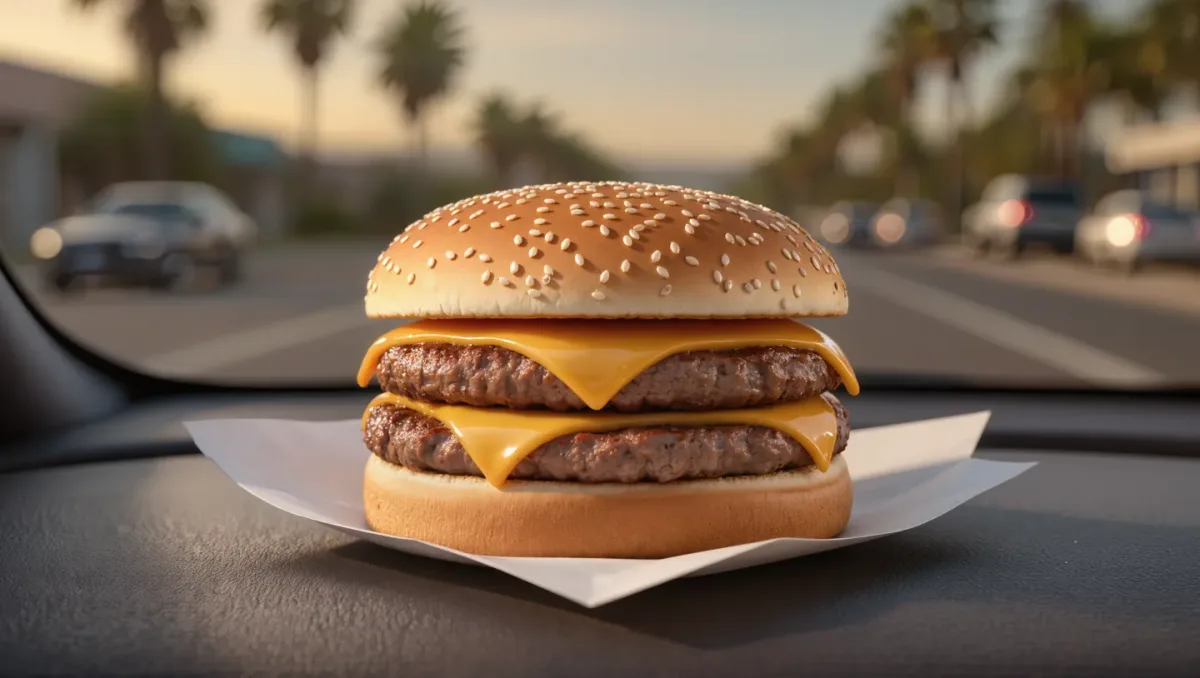
The answer starts with the automobile. Postwar Southern California had among the highest car ownership rates in the world, sprawling single-family neighborhoods, cheap land at the edge of town, and a generation of returning veterans with appetite and savings. Restaurants redesigned themselves around the windshield: drive-in carhops gave way to the drive-through window, and the Speedee Service System that the McDonald brothers introduced at San Bernardino in 1948, an assembly line kitchen with a stripped-down menu, became the industry's operating system.
The region also had a business culture primed to franchise. Industry legends followed one another down the same highways: Harry and Esther Snyder opened the first In-N-Out burger stand in Baldwin Park the same year the McDonald brothers rebuilt their stand, and Harry Snyder's innovation, a two-way intercom that let customers order from their cars, installed the drive-through speaker that is now universal. Glen Bell, a San Bernardino hot dog vendor watching the McDonald brothers' lines, spent a decade perfecting a fried taco shell before opening his first Taco Bell in Downey in 1962.
Who are the California originals?
- McDonald's, San Bernardino, 1940-1948: the brothers' assembly-line stand defined the format before Ray Kroc franchised it nationwide.
- In-N-Out Burger, Baldwin Park, 1948: the intercom drive-through; still family-owned and famously resistant to franchising.
- Jack in the Box, San Diego, 1951: Robert Peterson's early drive-through chain, built around the two-way speaker model.
- Carl's Jr., Anaheim, roots in 1941: Carl Karcher's hot dog cart grew into a hamburger empire.
- Taco Bell, Downey, 1962: Mexican-American food adapted to the drive-through format and franchised nationally.
- Del Taco, Barstow, 1964: burgers and tacos co-branded from the start.
- Panda Express, first outlet in Glendale in 1983: American Chinese fast casual that grew into one of the largest family-run restaurant companies in the country.
What did California's model export?
The industry's real innovations were organizational, not culinary: the limited menu, the standardized kitchen, the franchise royalty, the teenaged workforce, and the design of land deals where the restaurant company owns the corner lot. Those mechanics, perfected on Los Angeles boulevards, spread first across the Sun Belt and then the world, carrying a Southern California aesthetic, car windows, paper wrappers, neon signage, into global culture. Per industry analysis, the American quick-service restaurant sector now generates hundreds of billions of dollars a year, an industry whose blueprint was drafted in San Bernardino.
The labor question built into the business model
Fast food's California blueprint assumed two cheap inputs: land on the urban edge and a workforce of teenagers on their first job. Both assumptions have aged. The state's wage floors have risen faster than the national norm, culminating in the $20 hourly minimum for large fast food chains that took effect in April 2024 under the law creating a Fast Food Council, per the Department of Industrial Relations, and national chains have responded with kiosks, app ordering, and leaner staffing models that test the old drive-through choreography.
The industry's response is itself a California story. The same state that invented the format now serves as its laboratory for automation and pricing, and labor organizers who won the council model treat California as the precedent-setting market for the sector's working conditions nationwide. Consumers have watched the changes arrive as kiosk screens and higher menu boards, and industry surveys describe customers splitting between loyalty to the heritage brands and price-driven defection to groceries and fast casual competitors.
What has not changed is the cultural weight. A documentary about the McDonald brothers, retro merchandise, and pilgrimage traffic to the original sites in San Bernardino and Baldwin Park keep the founding era alive as heritage, and the brands trade on it deliberately, printing founding dates on cups. Few industries anywhere work as hard to remind customers they were invented in a specific place.
Why In-N-Out stayed California at heart
In-N-Out is the control case. The chain never franchised, keeps its menu nearly identical to the 1948 original, pays above-market wages by industry standards, and owns its distribution through regional warehouses, accepting slower growth in exchange for control. Its fresh-beef, no-freezer supply chain limits how far it can expand, which turned the brand into a geographic marker: people measure trips by In-N-Out coverage. The company, now run by the founding family's third generation after Lynsi Snyder took control, remains privately held, a rarity among national chains.
What to watch
Watch the tension between the industry's California roots and its California costs: a $20 fast food minimum wage for large chains since April 2024 per the Department of Industrial Relations, rising rents, and thinned margins are pushing some brands' newest growth eastward even as their heritage sites draw fans. The next chapter of fast food history may be written elsewhere, but the archive is here, marked with drive-through intercoms.