A local news legend is the anchor or reporter a community watched for years, sometimes decades, until that person felt less like a broadcaster and more like a neighbor. The role is fading as newsrooms shrink and viewing habits shift. But in many towns, the familiar face on the evening broadcast still does something no app can: it tells you what happened today, in your town, from someone you feel you know.
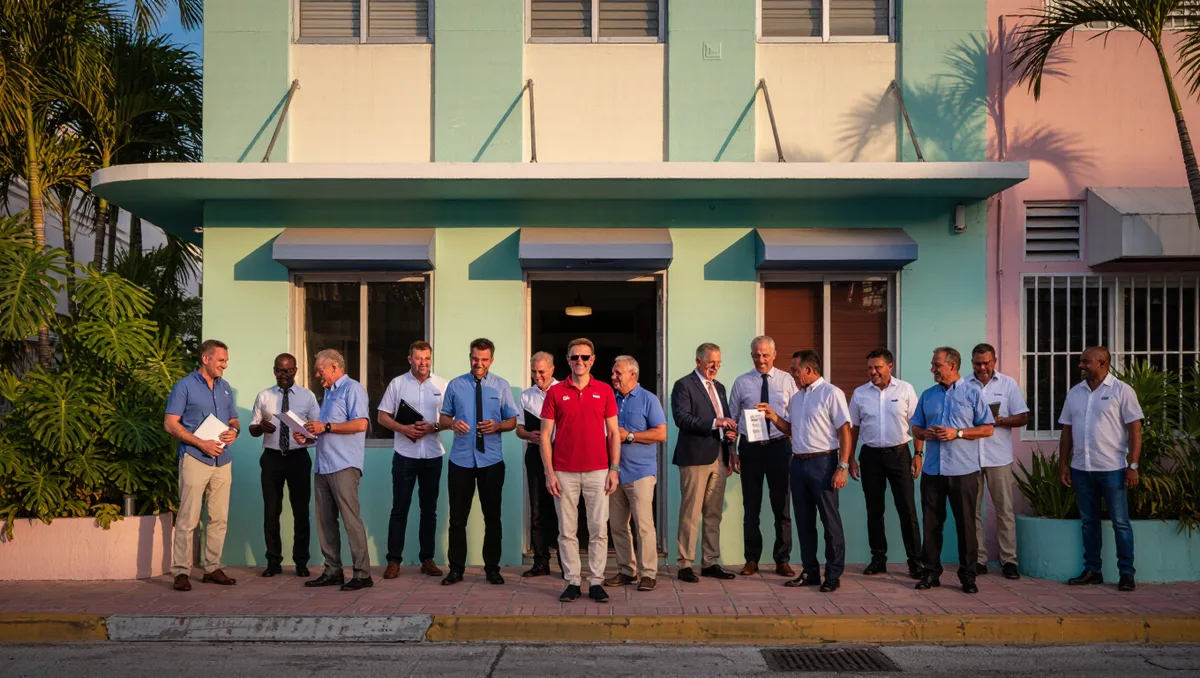
The pattern is easy to spot once you look for it. In Clermont, Florida, viewers of FOX 35 Orlando have watched reporter David Martin walk the Clermont Historic Village and host Amy Kaufeldt and T.J. Springer check out the animals at Showcase of Citrus as part of the station's Summer Block Party series, according to FOX 35 Orlando. That is the work in miniature: a station sending its people to a town's farms, festivals and historic sites, week after week, until the reporters themselves become part of the local routine.
This piece looks at what these longtime local journalists actually do for a community, why the role has grown fragile, and what readers lose, and keep, when the familiar face leaves the desk.
What makes a local anchor a community fixture?
Time and repetition do most of the work. An anchor who reads the news in the same market for a decade or more becomes part of the household schedule. Families tune in at six. Kids grow up hearing the same voice. When a storm, a school closure or a election result comes in, that voice is the one people trust to explain it.
But longevity alone is not the whole job. The anchors people remember tend to share a few habits:
- They show up in person, at the festival, the farm, the high school game, not just in the studio.
- They treat small stories seriously. A restaurant inspection or a fall festival gets real airtime.
- They stay long enough to see how decisions play out, so they can cover the second year of a problem, not just the first announcement.
That third habit matters most. Local knowledge compounds. A reporter who has covered a county for years knows which officials answer questions and which ones dodge, and knows when a routine agenda item hides something bigger.
Why do these familiar faces matter to local accountability?
Because attention is the enforcement mechanism. When a trusted local journalist covers a city council vote or a county inspection, residents learn what their government did, and officials know someone is watching. Our analysis of how coverage shapes accountability is covered in more depth in Why Local News Coverage Decides Whether City Hall Answers to You, but the short version is this: a community without a steady local reporter tends to get less answer from City Hall, not more. Readers following this should also see How to Follow Local News Live in California Without Paying for Cable.
The unglamorous service journalism counts here too. Consider the weekly restaurant inspection roundup that NewsBreak publishes for Lake County, Florida, which walks readers through recent health scores and notes that the state describes an inspection as a "snapshot" of conditions on a single day, per NewsBreak's Clermont coverage. Nobody wins an award for that story. But it is exactly the kind of recurring, practical information a community relied on its local news legend to deliver, and it still needs someone to deliver it.
What is happening to the local anchor role?
The pressures are structural, and they are best described plainly rather than with numbers this article cannot source. Advertising money that once paid for a hometown newsroom has moved to national platforms and search engines. Station groups have consolidated, so decisions about staffing in one town increasingly get made somewhere else. Younger viewers get headlines from feeds rather than fixtures, so the appointment-viewing habit that built these careers is weakening.
The result is a smaller bench. Fewer stations can afford to keep a well-known anchor in one market for twenty years. More careers now move market to market every few years, which resets the trust clock each time. And when a station cuts local reporting, the gap usually shows up first in the stories nobody assigns: the festival, the inspection roundup, the page-47 agenda item.
Some of the role is being filled in new forms. Digital aggregators now package local items for readers, and stations use tags and social feeds to keep coverage findable. The delivery changes. The underlying need, a known, accountable person telling you what happened where you live, has not changed at all.
What do communities lose when the familiar face leaves?
Three things, and they arrive at different speeds.
First, shared routine. When everyone watched the same broadcast, neighbors started the day with the same facts. That common baseline made conversation easier, at the diner and the council meeting alike. Feeds give everyone a different mix, so the baseline frays.
Second, memory. A longtime anchor remembers the flood of a decade ago, the developer who promised and never built, the sheriff's race that turned on one precinct. That memory is an editorial resource. A rotating cast has to relearn the town every few years.
Third, and hardest to replace, is the relationship. Readers will tell a reporter they have known for years about the thing that is wrong on their street. They will not email a tip line with the same ease. That flow of information is how a lot of local accountability journalism actually starts.
How can readers keep the habit alive?
Practical steps, none of which cost much:
- Watch, read or stream one local source on a regular schedule, even fifteen minutes a week. Habit is what keeps the economics of local news viable.
- When a local journalist covers something well, tell them so, and tell their station. Feedback is a signal newsrooms act on.
- Send tips. If you know about a problem on your street or in your agency, a known local reporter is the right first call.
- Support the outlets that put people on the ground. Coverage that requires a reporter to drive to the farm or the village costs more than a feed of rewritten releases, and it is worth more.
For readers who want the broadcast habit without the cable bill, How to Follow Local News Live in California Without Paying for Cable walks through the options. And for the print side of the same story, How Local Newspapers Keep Small Towns Connected looks at how small papers hold their towns together.
What this means for the next generation of local news legends
The evidence in this piece points one way: the role survives wherever a journalist stays put, shows up in person and treats small stories as important. The delivery platform is negotiable. The presence is not.
What remains unknown is whether the economics will support long tenures in enough markets to keep the type common. What the sources here do show is that the work continues where it is resourced, station teams still driving out to Clermont's farms and historic sites, aggregators still compiling the inspection lists, and that the audience response to that work, week after week, is what will decide whether the next town's familiar face gets to become a legend too.