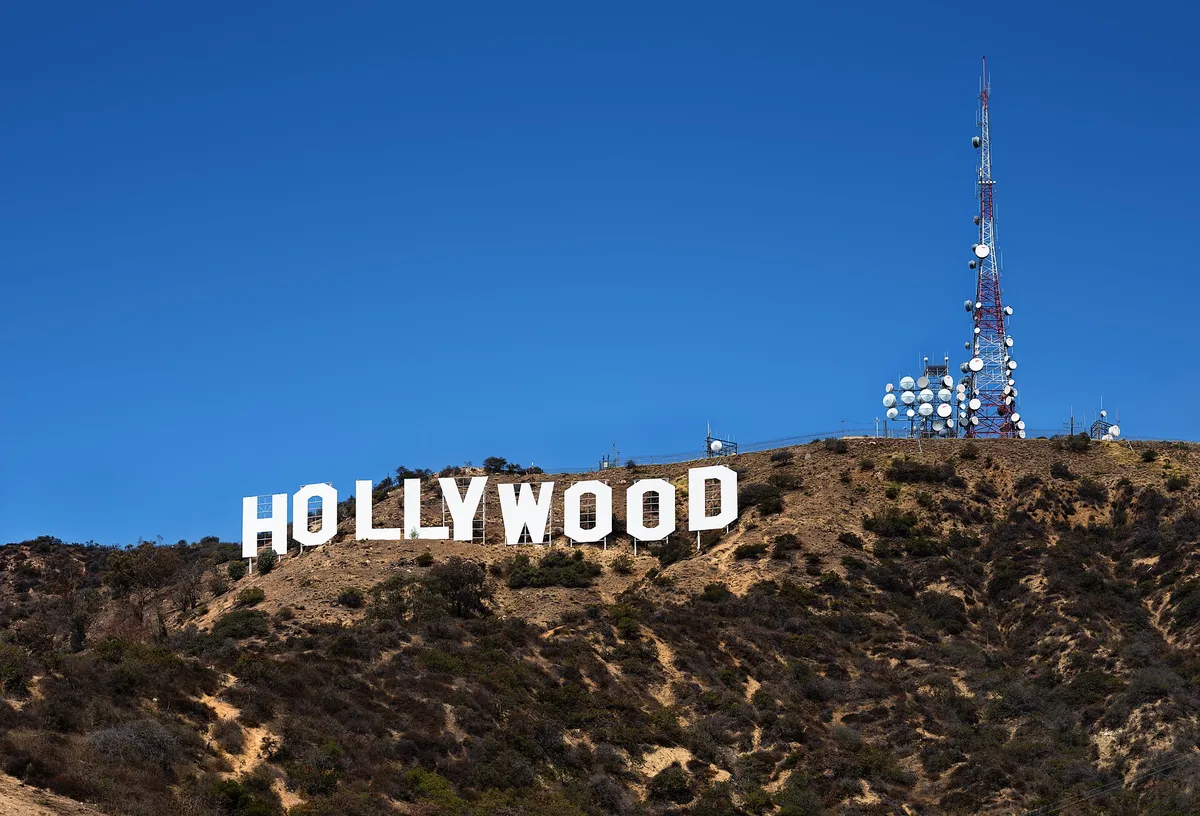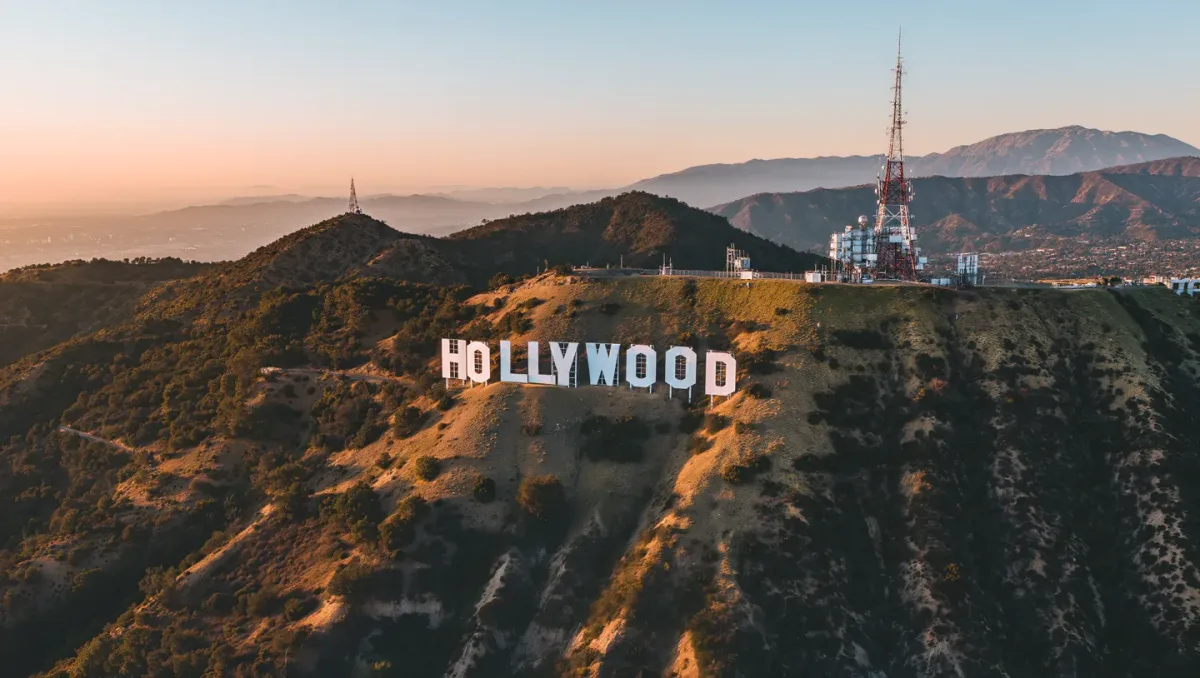
The Hollywood Sign turned one hundred years old in 2023, and it has never once advertised the movie business. The nine white letters standing on Mount Lee went up in 1923 as a promotional gimmick for a hillside housing development called Hollywoodland, costing about $21,000 to build, and every layer of its story since, from near-demolition to celebrity rescue, tracks the way Southern California sells an image of itself that turns out to be more valuable than the product underneath.
Understanding what the sign actually is, a decommissioned billboard on city parkland, explains why it survived, why it keeps appearing in everything from films to tourism campaigns, and what its upkeep says about how Los Angeles protects the landmarks that market it.
What was the sign originally built to sell?
In the early 1920s, developers Woodruff and Shoults were carving a residential subdivision called Hollywoodland out of the slopes below Mount Lee. To advertise it, the Hollywoodland Real Estate Trust erected an enormous temporary sign spelling the development's name in 50-foot letters, each face studded with roughly 4,000 light bulbs that blinked in sequence at night. Per accounts compiled by the Hollywood Sign Trust, the structure was intended to last about eighteen months.
The houses sold, and the sign, cheaper to leave standing than to demolish, stayed. As the film industry concentrated in nearby studios through the 1920s and 1930s, the glowing hillside letters shifted in the public mind from real estate advertisement to a nameplate for the entire dream factory.
How did Hollywoodland become Hollywood?
By the 1940s the sign was deteriorating, and in 1944 the city of Los Angeles acquired the surrounding land, later folding it into Griffith Park. In 1949 the Hollywood Chamber of Commerce took over repairs on the condition that the neglected final four letters, the LAND, be removed. The sign has read HOLLYWOOD ever since, nine letters instead of thirteen, officially pointing not at a subdivision but at the industry and city that borrowed its name.
The second rescue came in 1978, after the sign had rotted to the point that chunks of letters were falling down the hillside. Playboy founder Hugh Hefner organized a sponsor-a-letter fundraiser at $27,777 per letter, and nine donors, each assigned one letter of the sign, funded a complete rebuild in steel. Per the Hollywood Sign Trust, the 1978 structure, taller and far sturdier than the 1923 original, is what visitors photograph today.
Who owns and maintains it now?
The letters stand on city-owned parkland at the top of Mount Lee, the highest point in Griffith Park, and a nonprofit called the Hollywood Sign Trust holds the responsibility for maintaining and protecting them, working with the city's agencies. Security is a permanent operation: cameras, fencing, and patrols followed years of prank alterations and trespassing, and the trails around the sign are managed under park rules even as hikers keep seeking the closer vantage that Google Maps promises and rangers discourage.
| Year | Event |
|---|---|
| 1923 | Sign erected as HOLLYWOODLAND, a real estate ad costing about $21,000 |
| 1944 | City of Los Angeles acquires the surrounding land |
| 1949 | Chamber of Commerce repairs sign; LAND removed |
| 1978 | Hefner fundraiser funds steel rebuild at $27,777 per letter |
| 2023 | Sign marks its centennial as a protected landmark |
Why does a defunct billboard matter culturally?
The sign is the rare landmark that is simultaneously a physical object and a symbol with its own career. It has been destroyed on screen more often than any building in Los Angeles, appears in uncounted productions as shorthand for arrival and ambition, and anchors a tourism draw that city agencies measure in millions of visitors to Griffith Park and the surrounding trails each year. Its image is licensed, policed, and fought over in trademark disputes, which is the fate of brands rather than of signage.
The deeper California story is the one the sign accidentally preserved: the region's core business model has always been selling belief, first in hillside houses, then in movies, then in the idea of California itself. The sign outlived the first product and was recycled into the second, and it now markets both at once.
What the rescues say about Los Angeles
Both survivals followed the same pattern that still governs preservation politics in Los Angeles: neglect until the loss becomes imaginable, then a coalition of civic boosters and famous names paying for the fix. The 1949 repair was a Chamber of Commerce project aimed at protecting the city's brand; the 1978 rebuild was financed by nine sponsors whose $27,777 checks are themselves part of Hollywood lore. Preservation here has rarely been sentimental. It has been marketing with maintenance costs attached, and the sign's caretakers argue about it openly in those terms.
That pattern repeated in the decades since. Each restoration of paint and steel, each addition of cameras and fencing, arrives with the same justification used in 1923: the letters are an asset that generates far more attention than they cost. Few pieces of infrastructure anywhere carry a return on investment measured in global recognition, and fewer still can trace a direct line from a housing lot sale to a worldwide symbol of the entertainment economy.
For visitors planning a look, the practical geometry matters: the sign faces south toward the basin, so the classic postcard angles come from Griffith Observatory, Lake Hollywood Park, and various trailheads, while the land immediately behind the letters is closed residential parkland. Rangers issue citations to hikers who cross the fences, a reminder that the monument is also somebody's hillside.
What to watch
Watch the continuing tug-of-war between access and preservation on Mount Lee, where resident complaints, rideshare traffic, and park management keep colliding, and watch how the city handles the sign's image rights as the centennial generation of media uses it ever more freely. A structure that survived developers, decay, and demolition will now be tested by its own popularity.